Published October 9, 2026 · Updated October 8, 2026 · Checked by the editor against the listed sources
Think about how a car runs on a cold morning. It works, but it’s happier after a minute or two. Your body is similar. After sixty, joints can feel stiffer, muscles take longer to warm up, and jumping straight into exercise is less comfortable and less enjoyable.
This 8-minute warm-up gets your blood moving, loosens the main joints and prepares you for the strength, balance or walking you plan to do next.
Does warming up actually help?
Warm-ups are standard advice in exercise guidance, including from the US National Institute on Aging, and they feel helpful to most people. An honest note, though: research specifically on warm-ups in older adults is limited, so the benefits are more about comfort, readiness and common sense than hard numbers. It costs you eight minutes and is very low risk, so it’s a good habit to have.
Before you begin
- Wear comfortable clothes and flat, supportive shoes.
- Stand near a counter or sturdy chair you can hold.
- Move slowly and smoothly. This isn’t a workout.
- You should be able to talk comfortably throughout.
The 8-minute routine
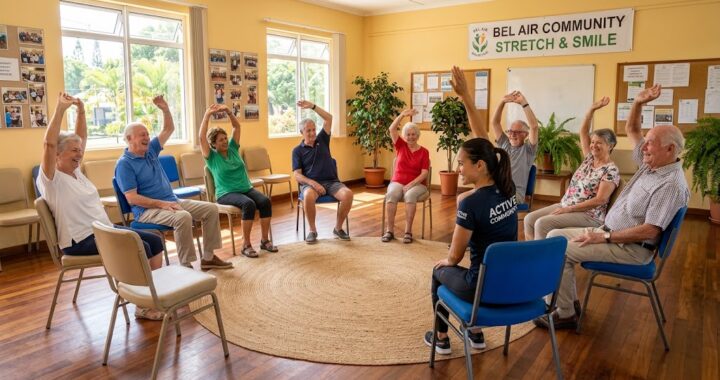
Spend about one minute on each move. If you prefer, do the whole routine seated.
| Minute | Move | How to do it |
|---|---|---|
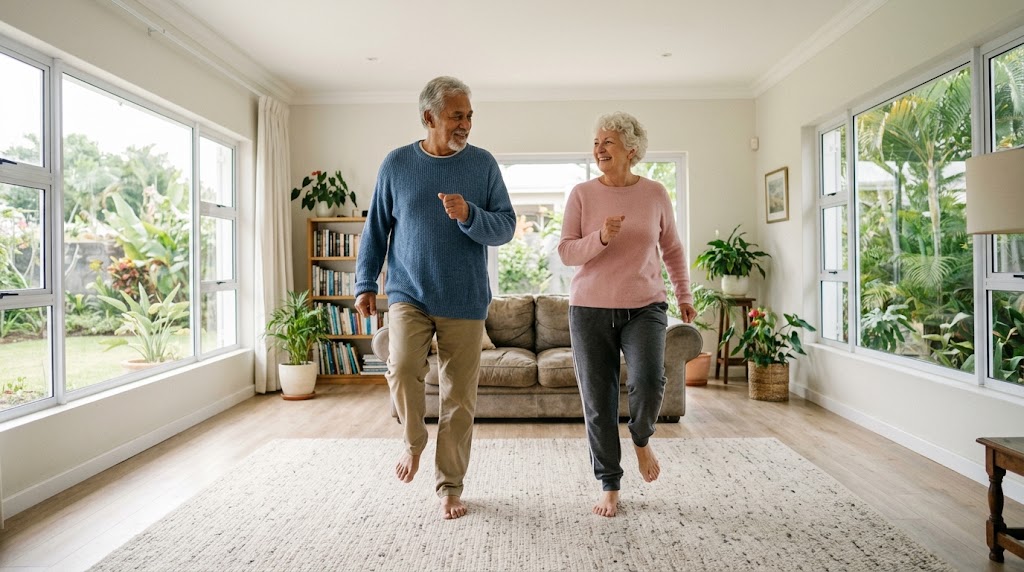
| 1 | March on the spot | Lift your knees lightly. Swing your arms naturally. Keep it easy. |
| 2 | Heel-toe rocks | Rock back onto your heels, lifting your toes, then forward onto your toes. Hold the counter if you need to. |
| 3 | Shoulder rolls | Roll both shoulders slowly backward, then forward. |
| 4 | Arm swings | Swing your arms gently forward and back, then in small circles. |
| 5 | Gentle torso twists | Hands on your hips, turn your upper body a little each way. Keep your hips facing forward. |
| 6 | Hip circles | Holding the counter, draw slow circles with one foot, as if tracing a coin on the floor. Switch legs halfway. |
| 7 | Side steps | Step to the side and back, with the counter close by. Gentle and slow. |
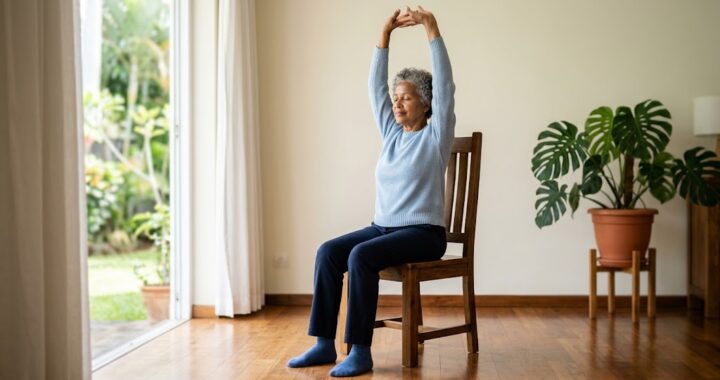
| 8 | Deep breaths with arm raise | Breathe in as you raise your arms, breathe out as you lower them. Finish calm, not puffed. |
A helpful tip is to imagine your hips are facing forward like headlights on a car—this ensures the rotation safely comes from your upper back rather than twisting your lower back or knees. Warm up from the ground up: ankles first, then hips, then shoulders.
How you should feel
By the end you should feel slightly warmer, looser, and perhaps a little more awake. You should not feel tired or breathless. If you do, shorten the routine next time and march more slowly.
Make it your own
- Stiff mornings: have a warm drink first, and extend the warm-up to 10 minutes.
- Limited mobility: do everything seated and reduce the range of movement.
- Before walking: use just the first four minutes and then ease into your walk.
- Before strength work: do all eight, then add one lighter set of your first exercise.
What a warm-up isn’t
It isn’t the time for long static stretches of cold muscles, or for pushing into pain. Save deeper stretches for the end of the session, when your muscles are warm.
Stop and get medical advice if you notice: chest pain or pressure, dizziness, severe shortness of breath, sharp joint pain, or palpitations. If you take heart or blood pressure medication, ask your doctor if the usual warm-up is right for you.
Quick answers
Do I need to warm up every time? Ideally yes, before any workout. Even three or four minutes is better than nothing.
Can I warm up if I have arthritis? Usually yes, and it often helps. Go gently and avoid forcing painful movements.
Is walking a warm-up? Easy walking for five minutes is a fine warm-up for a walk or lower-body workout.
How do I know it’s working? You’ll feel looser, and your first exercise will feel smoother.
Sources
Medical disclaimer: This article is for general information and education only. It is not medical advice and does not replace advice from your doctor or physiotherapist. Stop any exercise and seek medical help if you feel chest pain, dizziness, sharp pain or unusual shortness of breath.

Arthur Sterling — Founder and Editor
Not a medical professional
I started Fitness Marble because of my grandparents, to help older adults stay independent, confident and strong in their own homes. My background is in quality assurance and project management. I am not a doctor, physiotherapist or dietitian, and nothing here is medical advice.
Read more
Growing up, my grandparents instilled in me my core values and a deep sense of responsibility as the eldest son. As they grew older, their care shaped what I want this site to do.
My career has been in quality assurance and project management. That means I check details and follow a strict process, and that is how I work here. My job is to read public guidance from trusted sources such as the CDC, the World Health Organization and the National Institutes of Health, and turn it into simple, practical routines you can actually follow.
Every article lists its sources at the bottom so you can check them yourself. You can read how articles are researched and checked on our Editorial Policy page.
I write under the pen name Arthur Sterling to protect my privacy, but I remain fully accountable for what is published here. If you spot a mistake, email me at contact@fitnessmarble.com and I will correct it promptly.
Please talk to your own doctor before starting any new exercise programme, especially if you have a health condition or take medication.