Published October 11, 2026 · Updated October 8, 2026 · Checked by the editor against the listed sources
Your hips do a lot of quiet work. They help you stand up, climb stairs, step over a kerb, get into a car and put on your socks. When they stiffen, everything takes more effort, and many people start moving less, which makes the stiffness worse.
This routine is built from six gentle moves that work the hip through its normal ranges: bending, opening, lifting out to the side and extending behind you. It takes about ten minutes and needs only a chair and a counter.
Why hip mobility matters
Walking, standing and balance all rely on hips that can move freely and muscles around them that are strong enough to control that movement. Weak or stiff hips can change how you walk and put extra strain on your knees and back.
For people with hip osteoarthritis, NICE lists exercise as a core treatment, including both strengthening and general movement. It won’t regrow cartilage, but it can help you move better and often feel better.
Check before you begin
- If you’ve had a hip replacement or hip fracture, ask your surgeon or physiotherapist which moves are safe. Some surgeons advise avoiding bending the hip past 90 degrees or crossing your legs for a period after surgery, and that rules out several of these moves.
- Stop if you have sharp pain, groin pain that gets worse, or pain that wakes you at night.
- Use a sturdy counter or chair back for support during the standing moves.
The 6 moves
Aim for 8 to 10 repetitions on each side, once or twice through. Move slowly.
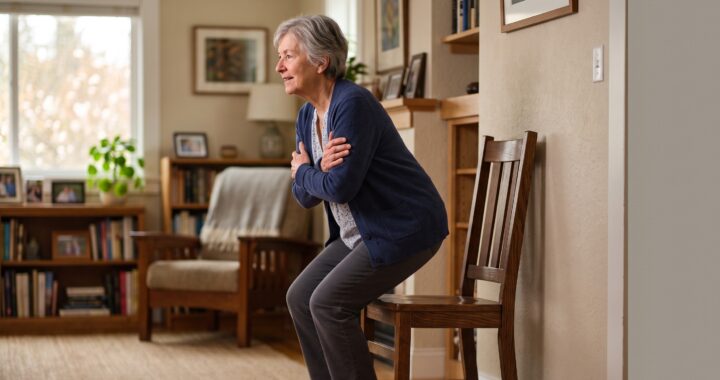
- Seated march. Sit tall and lift one knee, then lower it and switch. Warms up the hip flexors.
- Seated figure-4 stretch. Rest one ankle on the opposite knee and sit tall. Lean forward slightly from the hips until you feel a stretch in the outer hip. Hold 20 to 30 seconds per side. (Skip this one after a hip replacement unless cleared.)
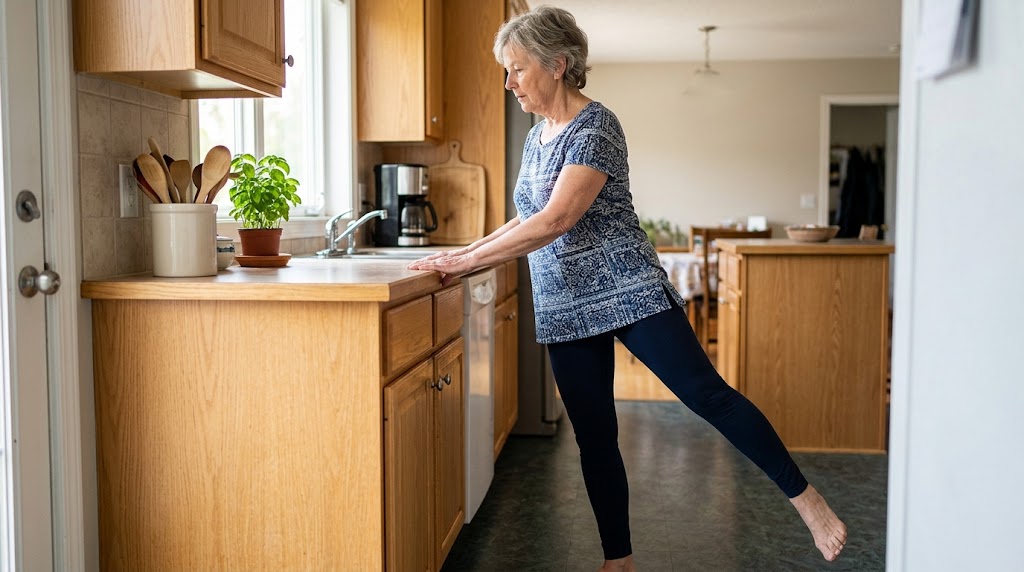
- Standing side leg raise. Holding the counter, lift one leg out to the side a short distance, keeping your toes pointing forward and your body upright. Lower slowly.
- Standing leg back. Holding the counter, move one leg straight back a short distance without arching your lower back. Squeeze your buttock gently. Lower slowly.
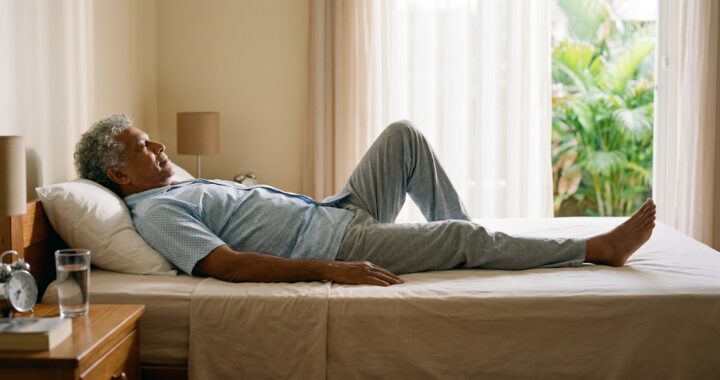
- Bridge. Lie on your back on a bed or mat with knees bent and feet flat. Gently squeeze your buttocks and lift your hips a few inches, then lower slowly. Do 6 to 8.
- Standing hip circles. Hold the counter and draw a small circle with one foot, 5 times each way, then switch.
A helpful trick is to focus on keeping your shoulders perfectly level; even if your foot only lifts two inches off the floor, the hip muscle is doing exactly the work it needs to do without straining your lower back.
How to build up
| Stage | What to do |
|---|---|
| Weeks 1 to 2 | 1 set of each move, 3 days a week |
| Weeks 3 to 4 | 2 sets of each move, 3 to 4 days a week |
| Weeks 5 onward | Add a 2-second pause at the top of each lift, or a light ankle weight if your clinician agrees |
The Physical Activity Guidelines for Americans suggest strengthening activities on two or more days a week for older adults, so three days a week fits comfortably within that.
Common mistakes
- Leaning the body to lift the leg higher. Keep your torso upright. A small controlled lift beats a big sloppy one.
- Arching the lower back in leg-back raises. Tighten your belly slightly.
- Rushing. Slow movement builds more control.
- Pushing into sharp pain. A stretch should feel tight, not sharp.
Easier and harder versions
Easier: do the whole routine seated where possible, reduce the range, or do fewer repetitions.
Harder: use a light ankle weight, hold each lift for 3 seconds, or add a resistance band above the knees (once you’ve learned the basics).
Stop and get medical advice if you notice: sharp or worsening hip or groin pain, a hip that gives way, new swelling, redness or heat, pain after a fall, or inability to put weight on the leg. Seek urgent help for chest pain, severe breathlessness or a painful swollen calf.
Quick answers
Why does my hip click? Painless clicking is often tendons moving over bone and is common. Pain, locking or giving way needs checking.
Should I stretch my hips every day? Gentle daily movement is fine for most people. Hold stretches only as long as is comfortable.
Can this help with hip arthritis? Exercise is a recommended part of treatment, but talk to your doctor or physiotherapist about the right plan.
Is it okay to do this on a bed? The bridge works well on a firm bed or mat if getting to the floor is difficult.
Sources
Medical disclaimer: This article is for general information and education only. It is not medical advice and does not replace advice from your doctor or physiotherapist. Stop any exercise and seek medical help if you feel chest pain, dizziness, sharp pain or unusual shortness of breath.

Arthur Sterling — Founder and Editor
Not a medical professional
I started Fitness Marble because of my grandparents, to help older adults stay independent, confident and strong in their own homes. My background is in quality assurance and project management. I am not a doctor, physiotherapist or dietitian, and nothing here is medical advice.
Read more
Growing up, my grandparents instilled in me my core values and a deep sense of responsibility as the eldest son. As they grew older, their care shaped what I want this site to do.
My career has been in quality assurance and project management. That means I check details and follow a strict process, and that is how I work here. My job is to read public guidance from trusted sources such as the CDC, the World Health Organization and the National Institutes of Health, and turn it into simple, practical routines you can actually follow.
Every article lists its sources at the bottom so you can check them yourself. You can read how articles are researched and checked on our Editorial Policy page.
I write under the pen name Arthur Sterling to protect my privacy, but I remain fully accountable for what is published here. If you spot a mistake, email me at contact@fitnessmarble.com and I will correct it promptly.
Please talk to your own doctor before starting any new exercise programme, especially if you have a health condition or take medication.