Published October 19, 2026 · Updated October 8, 2026 · Checked by the editor against the listed sources
A sore, tight lower back is one of the most common reasons older adults stop doing things they enjoy. Gardening, playing with grandchildren, even standing at the sink can start to feel like work. The good news is that most back pain is not dangerous, and gentle movement is usually part of the answer.
Here are five gentle moves to ease stiffness. First, though, a few important honest points.
What the evidence says (and doesn’t)
NICE guidance on low back pain recommends staying active and doing exercise, and advises against relying on rest. But the evidence for stretching on its own is modest. Think of these stretches as one part of a routine that should also include walking and gentle strengthening, not a standalone fix.
Read this first
- If you have osteoporosis or a spinal fracture history, avoid deep forward bending, forceful twisting and loaded flexion unless your clinician has cleared it. Several moves below are safer in the seated or supported versions.
- Do not stretch through sharp pain. Mild tension is fine.
- Check the red flags below before you start. Some back pain needs urgent assessment.
Get urgent medical help if your back pain comes with: numbness around the groin or inner thighs; new difficulty controlling your bladder or bowels; weakness or numbness in one or both legs that is spreading; fever; severe pain after a fall or injury; unexplained weight loss; or constant pain that is worse at night and doesn’t ease with movement.
The 5 gentle moves
Move slowly and breathe normally. Do each once or twice.
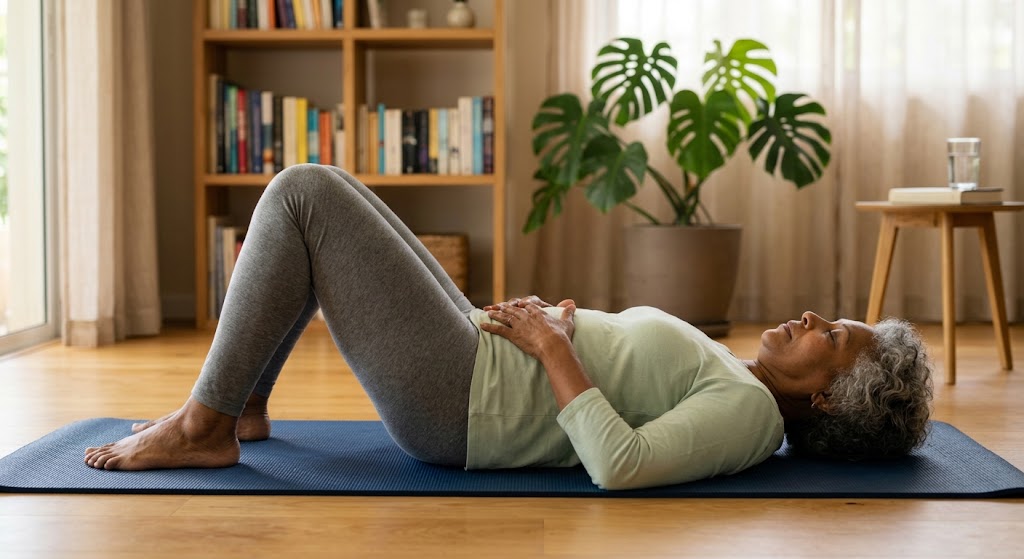
- Pelvic tilt. Lie on a bed or mat with knees bent and feet flat. Gently flatten your lower back toward the surface by tightening your belly, hold for 3 to 5 seconds, then release. Do 8 to 10 reps.
- Single knee to chest. From the same position, gently bring one knee toward your chest, holding behind your thigh. Hold 15 to 20 seconds, then switch. Keep the movement gentle and skip it if you have osteoporosis with fractures or a hip replacement, unless cleared.
- Seated cat-cow. Sit tall and place your hands on your thighs. Gently round your back and look down, then gently arch and look up, both within a small, comfortable range. Do 8 reps.
- Seated gentle rotation. Sit tall with arms folded across your chest. Turn your upper body a small distance each way, keeping your hips still. Do 6 each side. Skip if you have osteoporosis with fractures.
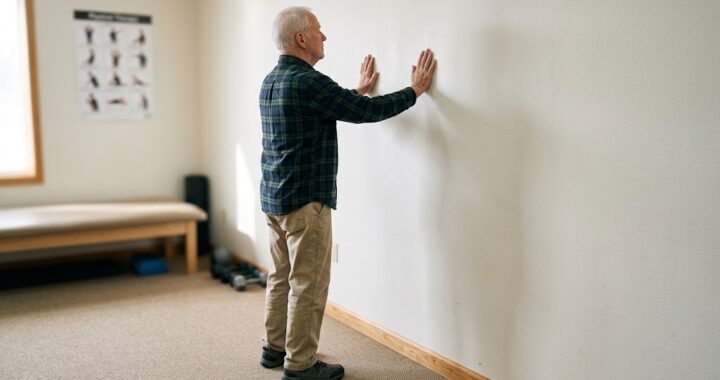
- Standing hip flexor stretch. Hold a counter. Step one foot back and gently tuck your tailbone under, until you feel a stretch at the front of the hip. Hold 15 to 20 seconds each side. Tight hips often add to back stiffness.
The habit that most often triggered any back stiffness wasn’t lifting heavy objects, but rather sitting sunk into deep, soft armchairs for hours without moving. Once you start practicing the seated cat-cow every time the television went to a commercial break, your daily complaints of an aching back will noticeably decrease.
How often and when
- Daily is fine for gentle movements like these.
- Best times: after a warm shower, or after a short walk.
- How long: 8 to 10 minutes.
If your back feels worse after a session, the next day do half as much and stay within a smaller range.
Beyond stretching: what actually helps most
- Keep walking. It’s one of the best things for an achy back.
- Strengthen your legs and hips. Sit-to-stands and hip exercises support your spine.
- Change position often. Don’t sit for more than 30 to 45 minutes at a time.
- Lift with your legs. Hold objects close to your body.
- Check your mattress and chair. If you wake stiff or slump when sitting, small changes can help.
- Use heat. A warm pack for 15 to 20 minutes can ease muscle tension.
Easier and harder versions
Easier: do the seated moves only and reduce the range.
Harder: hold the stretches slightly longer, and add bridges and supported bird-dog exercises when your clinician says it’s appropriate.
Quick answers
Should I rest if my back hurts? Short rest is okay on a bad day, but staying in bed for long periods is generally not advised.
Will these stretches fix my back pain? They may ease stiffness, but persistent pain deserves proper assessment.
Is it safe to do these with a bulging disc? It depends on the type and symptoms. Ask your doctor or physiotherapist first.
Can I use a back brace? Some people find them helpful in the short term. Ask your clinician before using one regularly.
Sources
Medical disclaimer: This article is for general information and education only. It is not medical advice and does not replace advice from your doctor or physiotherapist. Stop any exercise and seek medical help if you feel chest pain, dizziness, sharp pain or unusual shortness of breath.

Arthur Sterling — Founder and Editor
Not a medical professional
I started Fitness Marble because of my grandparents, to help older adults stay independent, confident and strong in their own homes. My background is in quality assurance and project management. I am not a doctor, physiotherapist or dietitian, and nothing here is medical advice.
Read more
Growing up, my grandparents instilled in me my core values and a deep sense of responsibility as the eldest son. As they grew older, their care shaped what I want this site to do.
My career has been in quality assurance and project management. That means I check details and follow a strict process, and that is how I work here. My job is to read public guidance from trusted sources such as the CDC, the World Health Organization and the National Institutes of Health, and turn it into simple, practical routines you can actually follow.
Every article lists its sources at the bottom so you can check them yourself. You can read how articles are researched and checked on our Editorial Policy page.
I write under the pen name Arthur Sterling to protect my privacy, but I remain fully accountable for what is published here. If you spot a mistake, email me at contact@fitnessmarble.com and I will correct it promptly.
Please talk to your own doctor before starting any new exercise programme, especially if you have a health condition or take medication.