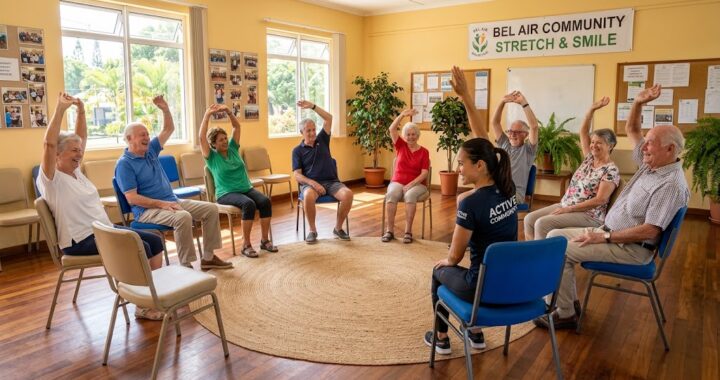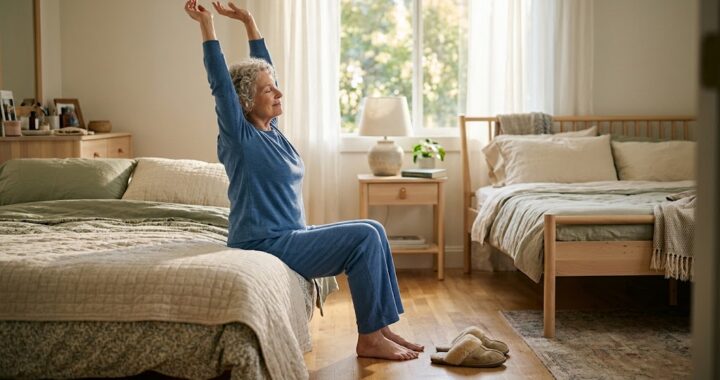
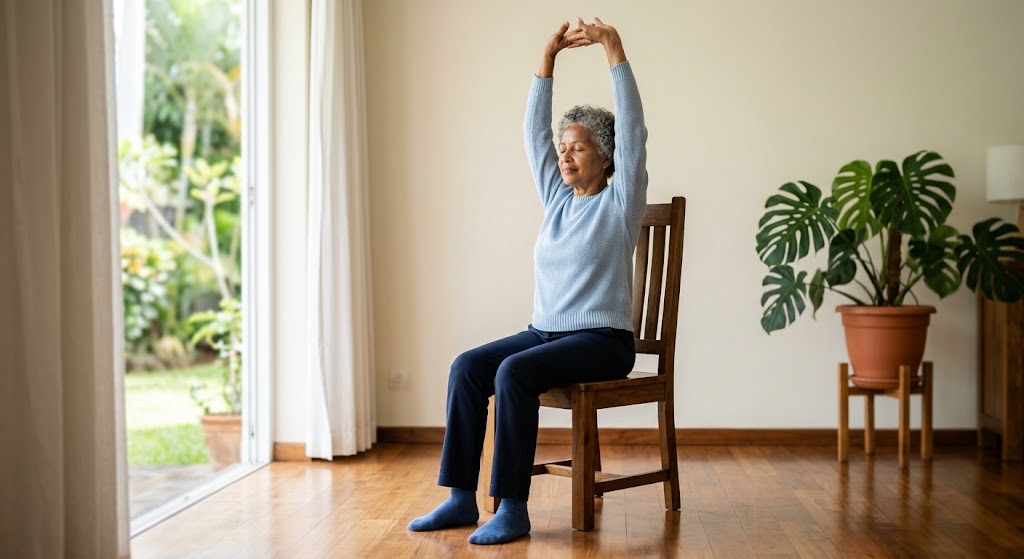
Chair yoga takes the slow breathing, gentle stretching and mindful movement of yoga and adapts it so you can do it seated, or with a chair for support. You don’t need to get on the floor, you don’t need to be flexible, and you can do it in your normal clothes.
This guide gives you eight gentle poses and a simple 12-minute sequence.
What the evidence says
Yoga is widely used for stiffness, stress and general fitness. The US National Center for Complementary and Integrative Health notes that research suggests yoga can help with some conditions, such as low back pain, though the strength of the evidence varies and results depend on the style and the person. For older adults, yoga is best treated as one part of a routine that also includes walking and strengthening, not as a standalone treatment.
Who should check first
Speak to your doctor before starting if you have:
- Osteoporosis or a past spinal fracture (avoid deep forward folds and strong twists)
- A hip or knee replacement or recent surgery
- High or low blood pressure, or a heart condition
- Dizziness when you change position, or glaucoma (avoid head-down positions)
- Significant joint pain
What you need
- A sturdy chair with a firm seat, no wheels, placed against a wall
- Flat, grippy shoes or bare feet on a non-slip floor
- Loose, comfortable clothes
The 8 poses
Hold each for 3 to 5 slow breaths, and move gently between them.
- Seated mountain. Sit tall with feet flat, hands on thighs, shoulders relaxed. Breathe slowly.
- Arm raise. Breathe in as you lift your arms out and up, breathe out as you lower them. Do 5 times.
- Seated cat-cow. Hands on thighs. Gently round your back and look down, then gently arch and look up, within a small comfortable range.
- Seated side bend. Reach one arm up and over, leaning a little to the opposite side. Keep both hips on the seat. Switch sides.
- Gentle seated twist. Turn your upper body a small distance to one side, hand resting on the chair back or your thigh. Skip if you have osteoporosis with fractures.
- Seated figure-4. Rest one ankle on the opposite knee and lean forward slightly from the hips. Skip after a hip replacement unless cleared.
- Ankle circles. Lift one foot slightly and draw circles with your toes, 5 each way. Switch feet.
- Resting breath. Close your eyes if you like, and take 5 slow, easy breaths.
When guiding my grandparents through these poses, I found that the seated cat-cow combined with rhythmic breathing was the single move they looked forward to most—it gently releases tension across the entire upper back without putting any uncomfortable load on the spine.
A 12-minute sequence
| Minutes | Pose |
|---|---|
| 0 to 2 | Seated mountain and arm raises |
| 2 to 4 | Cat-cow |
| 4 to 6 | Side bends |
| 6 to 8 | Gentle twists (if suitable) |
| 8 to 10 | Figure-4 and ankle circles |
| 10 to 12 | Resting breath |
Do this 3 to 4 days a week to start.
Make it safer
- Never force a stretch. You should feel tension, not pain.
- Breathe steadily and don’t hold your breath.
- Come out of poses slowly, especially if you feel light-headed.
- Avoid comparing yourself with videos of young, flexible people.
Choosing a class or video
Look for classes labelled “chair yoga”, “gentle yoga” or “yoga for seniors” taught by an instructor with recognised training and experience with older adults. Tell the instructor about your conditions. Avoid anyone who promises to cure arthritis or pain.
Stop and get medical help if you notice: chest pain or pressure, dizziness or faintness, severe shortness of breath, sharp or sudden pain, numbness or tingling, or new swelling.
Quick answers
Is chair yoga real yoga? Yes. It uses the same breathing and movement principles, adapted for support.
Can chair yoga improve balance? It may help, but for balance specifically, standing practice such as single-leg holds is better.
How often should I do it? Three or four days a week is a sensible start.
Do I need a mat? Not for chair yoga. A non-slip floor and a stable chair are enough.
Sources
Medical disclaimer: This article is for general information and education only. It is not medical advice and does not replace advice from your doctor or physiotherapist. Stop any exercise and seek medical help if you feel chest pain, dizziness, sharp pain or unusual shortness of breath.

Arthur Sterling — Founder and Editor
Not a medical professional
I started Fitness Marble because of my grandparents, to help older adults stay independent, confident and strong in their own homes. My background is in quality assurance and project management. I am not a doctor, physiotherapist or dietitian, and nothing here is medical advice.
Read more
Growing up, my grandparents instilled in me my core values and a deep sense of responsibility as the eldest son. As they grew older, their care shaped what I want this site to do.
My career has been in quality assurance and project management. That means I check details and follow a strict process, and that is how I work here. My job is to read public guidance from trusted sources such as the CDC, the World Health Organization and the National Institutes of Health, and turn it into simple, practical routines you can actually follow.
Every article lists its sources at the bottom so you can check them yourself. You can read how articles are researched and checked on our Editorial Policy page.
I write under the pen name Arthur Sterling to protect my privacy, but I remain fully accountable for what is published here. If you spot a mistake, email me at contact@fitnessmarble.com and I will correct it promptly.
Please talk to your own doctor before starting any new exercise programme, especially if you have a health condition or take medication.