
Published October 13, 2026 · Updated October 8, 2026 · Checked by the editor against the listed sources
Reaching up to a high shelf, fastening a bra, pulling on a jacket, washing your hair. Shoulder stiffness shows up in everyday jobs long before it becomes a “problem.” It’s common after 60, and in many people it comes from wear and tear, long periods without moving the arm overhead, or an old injury that never fully loosened up.
These five gentle exercises help keep the shoulders moving. They’re simple, need no equipment other than a wall and a towel, and are meant to be done within a comfortable range.
Why shoulders get stiff
The shoulder is the most mobile joint in your body, which also makes it vulnerable. The muscles of the rotator cuff stabilise it, and the tissue around the joint can tighten if you stop taking your arms through their full range. Poor posture, sitting for long periods and lack of reaching all contribute.
Stiffness can have many causes, including arthritis, rotator cuff problems and frozen shoulder, so this routine is for general movement, not for treating a specific diagnosis. If your pain is strong or getting worse, get it checked first.
Before you start
- Warm up first: a warm shower or five minutes of walking helps.
- Move within a range that feels comfortable. A mild stretch is fine. Sharp pain is not.
- Keep your neck relaxed and shoulders away from your ears.
- If you’ve had shoulder surgery or a recent injury, get advice before beginning.
The 5 exercises
- Pendulum swings. Lean forward slightly with one hand on a counter. Let the other arm hang down and swing it gently forward and back, then side to side, then in small circles. Do 10 in each direction, then switch arms.
- Shoulder blade squeezes. Sit tall. Gently draw your shoulder blades toward each other and slightly down, as if tucking them into your back pockets. Hold 3 to 5 seconds. Do 8 to 10 reps.
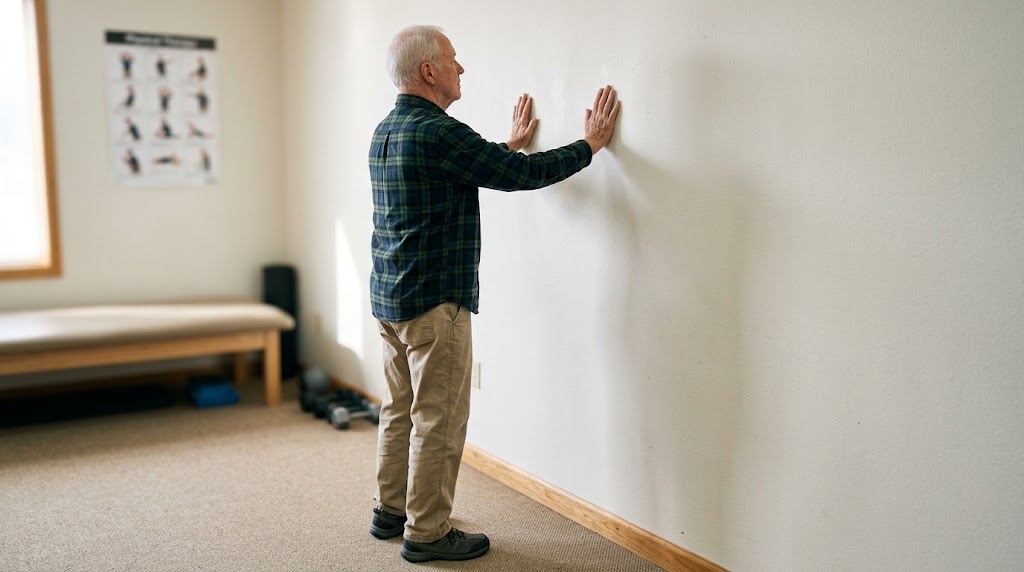
- Wall slides. Face a wall with your hands on it at chest height. Slowly slide your hands upward as far as is comfortable, then back down. Do 8 to 10 reps. Over weeks, you may notice you can reach a little higher.
- Towel stretch behind the back. Hold a small towel behind your back with one hand above your head and the other low. Gently pull up with the top hand, then with the bottom. Hold 15 to 20 seconds each side. Stay in comfort.
- Seated external rotation with elbows tucked. Hold a rolled towel or small bar between your elbows and your sides. Bend your elbows to 90 degrees and rotate your forearms outward a short distance, then return. Do 8 to 10 reps.
The most common compensation I see is shrugging the shoulders up toward the ears to force the hands higher. A cue that often helps is to imagine you are sliding your hands up the wall while actively trying to push your armpits down toward the floor—this keeps the neck relaxed and isolates the movement to the actual shoulder joint.
How often
Do the routine once a day, or at least 4 days a week. Take 8 to 10 minutes. After a few weeks, you can progress by adding a second round or holding the stretches slightly longer.
What counts as normal sensation?
- Normal: a mild stretch or mild ache during movement that settles quickly afterward.
- Not normal: sharp, catching or shooting pain, pain that spreads down the arm, numbness or tingling, or pain that is clearly worse the next morning.
If a move causes pain, reduce the range, do fewer reps, or skip it for now.
Easier and harder versions
Easier: do pendulum swings and shoulder blade squeezes only, with smaller movements.
Harder: add a light resistance band to the external rotation, or slide up the wall with your arms slightly farther apart.
Don’t ignore these: chest, jaw or left-arm pain, especially during exertion, can be a sign of a heart problem. Stop and seek urgent help. See a doctor promptly if you’ve had a fall and now can’t lift your arm, if your shoulder is hot, red or swollen, if you have night pain that stops you sleeping, or if stiffness is steadily getting worse.
Daily habits that help
- Change position often. Don’t sit slumped for hours.
- Reach overhead a few times a day within comfort.
- Avoid sleeping on a painful shoulder when possible, and support your arm with a pillow.
- Keep frequently used items at chest height, not above your head.
Quick answers
Will this fix a frozen shoulder? No. Frozen shoulder needs a proper diagnosis. Gentle movement may be part of treatment, but ask your clinician.
Is it normal for one shoulder to be stiffer? Yes, it’s common, often on the side you use less or one that had an old injury.
Should I use weights? Not at first. Mobility comes first, then light resistance if appropriate.
How soon will I notice improvement? Some people feel looser within two to four weeks, though it varies with the cause.
Sources
Medical disclaimer: This article is for general information and education only. It is not medical advice and does not replace advice from your doctor or physiotherapist. Stop any exercise and seek medical help if you feel chest pain, dizziness, sharp pain or unusual shortness of breath.

Arthur Sterling — Founder and Editor
Not a medical professional
I started Fitness Marble because of my grandparents, to help older adults stay independent, confident and strong in their own homes. My background is in quality assurance and project management. I am not a doctor, physiotherapist or dietitian, and nothing here is medical advice.
Read more
Growing up, my grandparents instilled in me my core values and a deep sense of responsibility as the eldest son. As they grew older, their care shaped what I want this site to do.
My career has been in quality assurance and project management. That means I check details and follow a strict process, and that is how I work here. My job is to read public guidance from trusted sources such as the CDC, the World Health Organization and the National Institutes of Health, and turn it into simple, practical routines you can actually follow.
Every article lists its sources at the bottom so you can check them yourself. You can read how articles are researched and checked on our Editorial Policy page.
I write under the pen name Arthur Sterling to protect my privacy, but I remain fully accountable for what is published here. If you spot a mistake, email me at contact@fitnessmarble.com and I will correct it promptly.
Please talk to your own doctor before starting any new exercise programme, especially if you have a health condition or take medication.
