Published October 8, 2026 · Checked by the editor against the listed sources
Stiff knees are one of the most common complaints after 60. They creak on the stairs, they protest after sitting through a film, and they make you wonder whether you should rest them or move them. For most people with ordinary wear-and-tear knee stiffness, the answer is move them, gently.
This routine uses a chair for support, takes about ten minutes, and puts very little load through the joints. It won’t cure arthritis, but it can help keep the muscles around your knees strong and your joints moving.
Why movement helps stiff knees
Cartilage has no direct blood supply, so it relies on movement to bring in nutrients. Strong thigh muscles also act like shock absorbers, taking some of the load off the joint. The UK’s NICE guidelines for osteoarthritis list exercise, including strengthening and general activity, as a core treatment for everyone with the condition, whatever their age or severity.
That said, exercise doesn’t reverse joint changes. The aim is better movement, strength and confidence, and often less pain.
Before you start
- Use a sturdy chair with a firm seat and no wheels, placed against a wall.
- Sit tall, with your feet flat on the floor.
- A little discomfort is expected. Aim for effort you’d call 3 or 4 out of 10 at most.
- Check with your doctor first if you’ve had a recent knee operation or injury, a hot swollen knee, or if your knee locks or gives way.
The 5 exercises
Do 8 to 12 repetitions of each, once or twice through, on both legs. Move slowly.
- Ankle pumps. Straighten one leg slightly and point your toes away from you, then pull them back toward you. This gets the circulation going. Do 15 pumps per foot.
- Seated knee extension. Slowly straighten one knee until your leg is level with the seat. Hold for 2 seconds, then lower slowly. This strengthens the front of the thigh, which protects the knee.
- Heel slides. With your heel on the floor, slide your foot back under the chair as far as is comfortable, then slide it forward. This works on bending the knee.
- Seated march. Lift one knee a few inches and lower it, then switch. It loosens the hips and warms up the legs.
- Straight-leg hold. Straighten one leg and hold it level for 3 to 5 seconds, tightening your thigh. Lower slowly. Start with 5 reps.
Imagine pressing the back of your knee gently toward the seat as you straighten your leg. It helps you feel the thigh muscle working.
How often
- Daily or at least 4 days a week. These are gentle enough to do often.
- Best time: after a warm shower or a few minutes of walking, when joints feel looser.
- Progress: add a third set, a longer hold, or an ankle weight only when the basics feel easy, and only with your clinician’s okay.
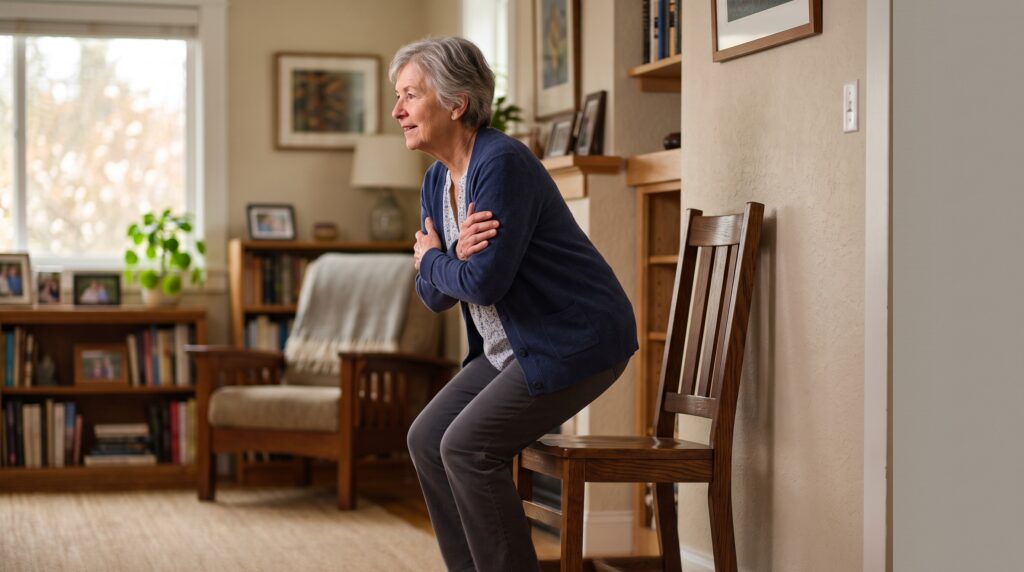
When you feel ready, add the sit-to-stand exercise to build leg strength.
What about the pain?
A common rule used by physiotherapists is that mild discomfort that settles within an hour or so is acceptable. If your knee is clearly more painful the next morning, you did too much. Next time, do fewer repetitions or a smaller range.
Sharp pain, a catching or locking feeling, or the knee giving way is not normal effort. Stop and get it checked.
Easier and harder options
Easier: reduce the range of movement, hold for a shorter time, do one set instead of two, or use a heat pack for a few minutes beforehand.
Harder: slow the lowering phase to 4 seconds, add a light ankle weight (ask your clinician first), or hold the top position for 5 seconds.
When to see a doctor
See a doctor if: your knee is hot, red and swollen; you can’t bear weight; it locks or gives way; morning stiffness lasts longer than about 30 minutes; you have a fever with joint pain; or the pain wakes you at night. Seek urgent help if you also have chest pain, a swollen and painful calf, or shortness of breath.
Quick answers
Should I rest a stiff knee instead? A day or two of rest after a flare-up can help, but long-term rest makes stiffness worse.
Is it okay to hear clicking? Painless clicking is common. Painful clicking, catching or swelling needs a check.
Will this replace physiotherapy? No. If your knee is limiting daily life, a physiotherapist can tailor exercises and check what’s going on.
Can I use a knee brace? Some people find them helpful, but ask your doctor or physiotherapist first.
Sources
Medical disclaimer: This article is for general information and education only. It is not medical advice and does not replace advice from your doctor or physiotherapist. Stop any exercise and seek medical help if you feel chest pain, dizziness, sharp pain or unusual shortness of breath.

Arthur Sterling — Founder and Editor
Not a medical professional
I started Fitness Marble because of my grandparents, to help older adults stay independent, confident and strong in their own homes. My background is in quality assurance and project management. I am not a doctor, physiotherapist or dietitian, and nothing here is medical advice.
Read more
Growing up, my grandparents instilled in me my core values and a deep sense of responsibility as the eldest son. As they grew older, their care shaped what I want this site to do.
My career has been in quality assurance and project management. That means I check details and follow a strict process, and that is how I work here. My job is to read public guidance from trusted sources such as the CDC, the World Health Organization and the National Institutes of Health, and turn it into simple, practical routines you can actually follow.
Every article lists its sources at the bottom so you can check them yourself. You can read how articles are researched and checked on our Editorial Policy page.
I write under the pen name Arthur Sterling to protect my privacy, but I remain fully accountable for what is published here. If you spot a mistake, email me at contact@fitnessmarble.com and I will correct it promptly.
Please talk to your own doctor before starting any new exercise programme, especially if you have a health condition or take medication.