
Published October 15, 2026 · Updated October 8, 2026 · Checked by the editor against the listed sources
Walking is the most accessible exercise there is. It needs no gym, no equipment and no special skill. It supports your heart, your mood, your legs and your independence. The trouble for many people is knowing where to begin, especially after a long gap or a health scare.
This 4-week plan starts small on purpose. The goal isn’t to impress anyone. It’s to build a habit you can keep.
What the guidelines recommend
The WHO and the Physical Activity Guidelines for Americans suggest that older adults aim for around 150 minutes of moderate-intensity activity a week, and up to 300 minutes for added benefit. The US guidelines also point out that activity doesn’t have to come in long blocks. Shorter bouts count towards your weekly total.
If you’re currently doing very little, any increase is worthwhile. Don’t think of 150 minutes as a pass-or-fail mark. It’s a direction to travel in.
The talk test: your simple intensity gauge
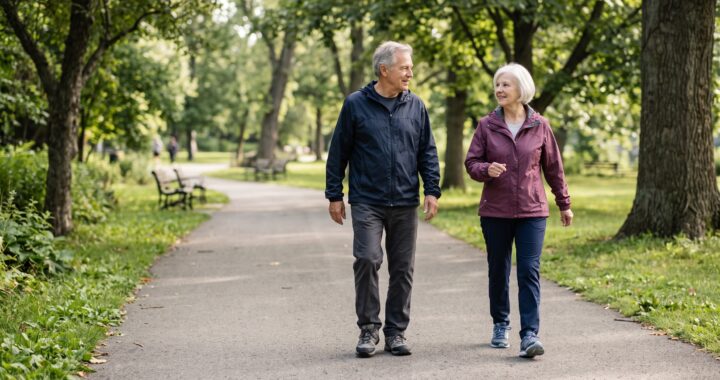
You don’t need a heart-rate monitor. During a moderate-intensity walk you should be able to talk but not sing. If you can sing, speed up a little. If you can’t say a short sentence without gasping, slow down.
Before you start
- If you have a heart condition, lung disease, diabetes, dizziness or other medical issues, check with your doctor first.
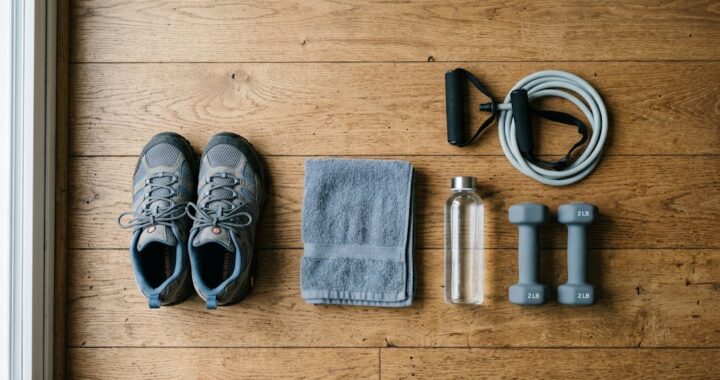
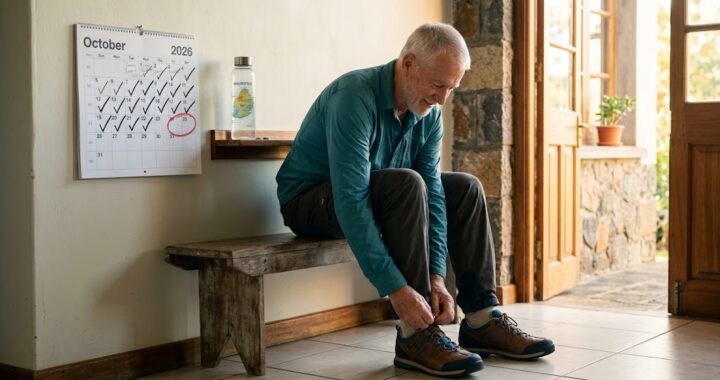
- Choose supportive, well-fitting shoes with good grip.
- Pick a flat, familiar route to begin with, preferably with benches to rest on.
- Take your phone, and tell someone where you’re going.
- Carry water, and dress in layers.
The 4-week plan
| Week | Days per week | Minutes per walk | Weekly total | Pace |
|---|---|---|---|---|
| 1 | 3 | 10 | 30 | Easy, can chat |
| 2 | 4 | 15 | 60 | Comfortable, slightly warm |
| 3 | 4 to 5 | 20 | 80 to 100 | Brisk but can talk |
| 4 | 5 | 25 to 30 | 125 to 150 | Brisk but can talk |
If a week feels too hard, repeat it. If you miss a day, simply carry on; don’t try to catch up.
Walking can be split. Two 10-minute walks in a day count just as much as one 20-minute walk.
When starting out, the most common mistake I see is setting out too fast on day one, feeling exhausted, and never walking on day two. A trick that helps is to treat your first week’s walks simply as “putting on your shoes and going to the end of the street”—the goal is building the routine of getting out the door, not breaking a sweat.
Warm up and cool down
- Warm up: walk very slowly for the first 3 to 5 minutes.
- Cool down: slow the pace for the last 3 minutes, then gently stretch your calves and thighs.
Staying safe on your walk
- Avoid icy, uneven or poorly lit surfaces.
- Walk in the cooler part of the day in hot weather, and drink water.
- Watch the ground, not your phone.
- Use a walking stick or poles if you have balance concerns and have been advised to.
Stop and get medical help if you notice: chest pain or pressure, severe shortness of breath, dizziness or faintness, sudden weakness, pain spreading to your arm or jaw, or a rapid irregular heartbeat. Call your emergency number for chest pain that doesn’t ease with rest.
Keeping it going
- Make it social. Walking with a friend or a group makes you more likely to keep going.
- Track it. A paper diary with ticks is surprisingly motivating.
- Have a bad-weather plan. Walk laps indoors, or march on the spot while watching TV.
- Add variety. A park, a river path, or a new neighbourhood keeps it interesting.
- Celebrate small wins. Four weeks of consistent walking is a real achievement.
What to do after week 4
Hold at your week 4 level for a few weeks until it feels easy. Then you can add gentle hills, walk a little faster, or add a fourth or fifth day. Adding strength and balance work, such as sit-to-stands and single-leg practice, will make your walking steadier and safer.
Quick answers
Do I need 10,000 steps? No. That number is a marketing figure, not a medical target. Research suggests benefits start well below it.
Is walking enough exercise? It’s excellent, but guidelines also recommend strength and balance work for older adults.
What if I get sore? Mild muscle tiredness is normal. Sharp joint pain isn’t. Rest and see your doctor if it lingers.
Should I walk after meals? A gentle walk after eating is fine for most people. Avoid hard effort right after a heavy meal.
Sources
Medical disclaimer: This article is for general information and education only. It is not medical advice and does not replace advice from your doctor or physiotherapist. Stop any exercise and seek medical help if you feel chest pain, dizziness, sharp pain or unusual shortness of breath.

Arthur Sterling — Founder and Editor
Not a medical professional
I started Fitness Marble because of my grandparents, to help older adults stay independent, confident and strong in their own homes. My background is in quality assurance and project management. I am not a doctor, physiotherapist or dietitian, and nothing here is medical advice.
Read more
Growing up, my grandparents instilled in me my core values and a deep sense of responsibility as the eldest son. As they grew older, their care shaped what I want this site to do.
My career has been in quality assurance and project management. That means I check details and follow a strict process, and that is how I work here. My job is to read public guidance from trusted sources such as the CDC, the World Health Organization and the National Institutes of Health, and turn it into simple, practical routines you can actually follow.
Every article lists its sources at the bottom so you can check them yourself. You can read how articles are researched and checked on our Editorial Policy page.
I write under the pen name Arthur Sterling to protect my privacy, but I remain fully accountable for what is published here. If you spot a mistake, email me at contact@fitnessmarble.com and I will correct it promptly.
Please talk to your own doctor before starting any new exercise programme, especially if you have a health condition or take medication.