Published October 17, 2026 · Updated October 8, 2026 · Checked by the editor against the listed sources
Most of the advice about falls is about prevention, and rightly so. But even careful people sometimes fall, and knowing what to do in the first few minutes can prevent a minor fall from becoming a serious one. Many people who fall are afraid it will happen again, and that fear can make them move less, which weakens them further. Knowing a plan helps.
This guide covers the first and most important decision (whether to move at all), then how to get up if you’re unhurt, and how to practise safely.
First: should you get up at all?
Don’t rush to get up. Stay still for a minute or two and check how you feel. Breathe slowly. Then ask yourself:
- Do I have severe pain, especially in my hip, back, neck, head or wrist?
- Did I hit my head, or am I confused or dizzy?
- Can I not move an arm or leg, or does a limb look out of shape?
- Am I bleeding heavily?
If the answer to any of these is yes, do not try to get up. Call for help by shouting, using a pendant alarm or phone, or banging on a wall or the floor. Keep warm by pulling a blanket, coat or rug over yourself if you can reach one. Moving with a broken hip or a neck injury can cause serious harm.
Staying on the floor for an hour or more after a fall, sometimes called a “long lie”, is linked with worse outcomes, including dehydration, pressure sores, hypothermia and loss of confidence. That’s why a way to call for help matters so much.
If you’re unhurt: how to get up
Only try this if you feel well, have no significant pain and feel clear-headed. Take your time.
- Roll onto your side. Bend one knee, reach your opposite arm across your body and roll onto your side.
- Push up to your elbow, then your hand. Use your arms to lift your upper body, resting if you need to.
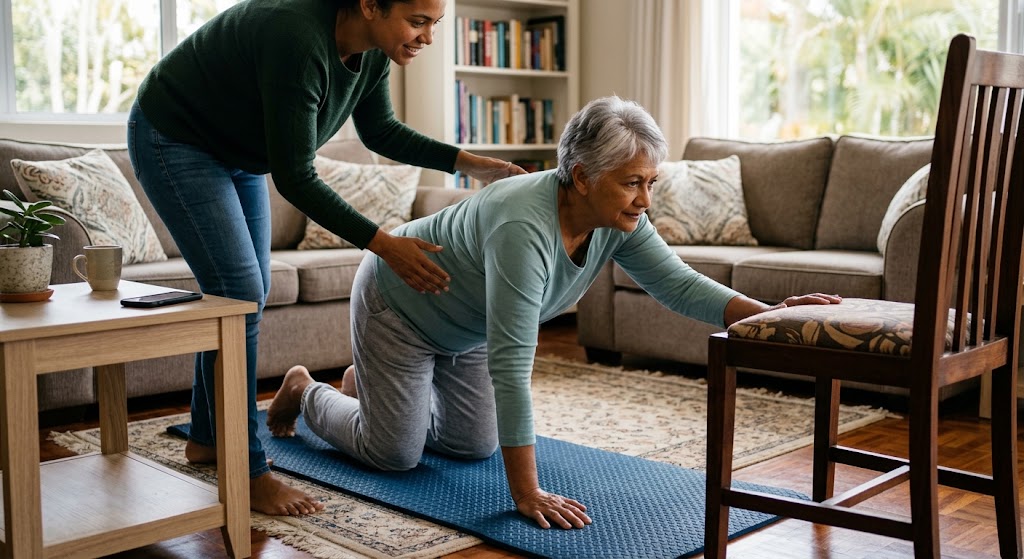
- Get onto your hands and knees. Bring your knees underneath you. Rest here for a moment.
- Crawl to a sturdy chair. Choose one that won’t move, ideally with its back against a wall.
- Place both hands on the seat. Bring your stronger leg forward so that foot is flat on the floor, kneeling on the other knee.
- Push up. Press through your hands and front foot to stand, then turn and sit down on the chair.
- Sit and rest. Stay seated for a few minutes. Have a drink of water, and call someone to tell them you’ve fallen.
I always tell people to count slowly to five at the hands-and-knees stage to let their blood pressure stabilize before trying to stand. The step from hands and knees to the chair is usually the hardest, so rehearse that part most.
Tell someone, even if you feel fine
Always tell a family member, friend or your doctor about any fall, even a minor one. A fall can be a sign of something treatable, such as a medication side effect, low blood pressure, a vision problem or a new health issue. Check in with a doctor if you have fallen more than once in a year.
Practising safely
Practising getting up from the floor can build confidence and strength, but it must be done carefully.
- Ask your doctor or physiotherapist whether it is suitable for you, particularly if you have heart problems, osteoporosis, joint replacements or very limited mobility.
- Practise on a padded mat or carpet, not hard flooring.
- Have a family member or friend nearby, and a phone within reach.
- Stop at the first sign of dizziness, chest pain or sharp pain.
- Start by practising only steps 3 to 6 from hands-and-knees, then build up.
If you can’t get up from the floor, that’s important information. A physiotherapist can help you build up the strength you need, and an occupational therapist can suggest home changes and alarm options.
Make a “just in case” plan
- Carry a phone in a pocket, not on a table across the room.
- Consider a medical alert pendant or watch that can call for help even if you can’t reach a phone.
- Agree a daily check-in with a neighbour or relative.
- Know where you’d go for help. Keep emergency numbers visible.
- Reduce your risk at home. Remove loose rugs, add grab bars and non-slip mats, and improve lighting.
Call emergency services if: you’ve hit your head and feel confused or drowsy, you can’t move a limb, you have chest pain, severe pain, heavy bleeding, or you can’t get up and nobody is available to help.
Quick answers
Is it okay to crawl? Yes. Crawling to a sturdy chair is a safe, recommended method.
What if I don’t have a chair nearby? Stay where you are and call for help, or crawl slowly to the nearest sturdy furniture if you feel well.
How do I stop being afraid of falling again? Strength and balance training reduces risk and builds confidence. Ask your doctor about a falls-prevention program.
Should I see a doctor after a minor fall? Yes, especially if it was your second in a year, you were dizzy beforehand, or you hit your head.
Sources
Medical disclaimer: This article is for general information and education only. It is not medical advice and does not replace advice from your doctor or physiotherapist. Stop any exercise and seek medical help if you feel chest pain, dizziness, sharp pain or unusual shortness of breath.

Arthur Sterling — Founder and Editor
Not a medical professional
I started Fitness Marble because of my grandparents, to help older adults stay independent, confident and strong in their own homes. My background is in quality assurance and project management. I am not a doctor, physiotherapist or dietitian, and nothing here is medical advice.
Read more
Growing up, my grandparents instilled in me my core values and a deep sense of responsibility as the eldest son. As they grew older, their care shaped what I want this site to do.
My career has been in quality assurance and project management. That means I check details and follow a strict process, and that is how I work here. My job is to read public guidance from trusted sources such as the CDC, the World Health Organization and the National Institutes of Health, and turn it into simple, practical routines you can actually follow.
Every article lists its sources at the bottom so you can check them yourself. You can read how articles are researched and checked on our Editorial Policy page.
I write under the pen name Arthur Sterling to protect my privacy, but I remain fully accountable for what is published here. If you spot a mistake, email me at contact@fitnessmarble.com and I will correct it promptly.
Please talk to your own doctor before starting any new exercise programme, especially if you have a health condition or take medication.