
Published September 12, 2026 · Updated October 15, 2026 · Checked by the editor against the listed sources
Walking is the most common exercise for older adults, and for good reason. It needs no equipment, it is easy on most joints, and you can do it almost anywhere. The harder question is how much walking actually counts as exercise for your heart. This guide covers the weekly targets from major health organisations, how to tell whether your pace is brisk enough, and how to build up without overdoing it.
This article is general education, not personal medical advice. If you have heart disease, high blood pressure, diabetes, chest pain or breathlessness, or you have been inactive for a long time, talk to your doctor before you increase your activity.
What the guidelines recommend
The US Centers for Disease Control and Prevention (CDC) recommends that adults aged 65 and older get at least 150 minutes of moderate-intensity aerobic activity a week, or 75 minutes of vigorous activity, or an equivalent mix of both. It also recommends activities that strengthen muscles on at least 2 days a week and activities that improve balance.
The American Heart Association (AHA) gives the same weekly figure for adults: at least 150 minutes of moderate-intensity aerobic activity, or 75 minutes of vigorous activity, or a combination. It adds that 300 minutes a week brings additional benefits. The AHA lists brisk walking, at least 2.5 miles per hour, as an example of moderate-intensity activity.
The World Health Organization (WHO) also uses 150 minutes of moderate-intensity activity per week as its adult figure, and notes that all age groups should limit time spent sitting.
Put simply: 150 minutes a week is the target most heart organisations point to. That works out to about 30 minutes on 5 days.
You do not need to start at 30 minutes
If you are not there yet, that is normal. Most people begin lower and build up. A few ways to get started:
- Start with 5 to 10 minutes. A short walk after a meal counts. Several short walks add up the same way as one long one.
- Add a little each week. Try an extra few minutes every week or two, rather than doubling your time at once.
- Pick a regular time. A fixed slot, such as after breakfast, makes the habit easier to keep.
- Use a route you like. A flat loop near home that you enjoy is better than an ambitious route you skip.
Doing some activity is better than none. If 150 minutes feels far away, the first goal is simply to walk more often than you do now.
What counts as brisk?
Moderate intensity means your breathing and heart rate go up, but you are not exhausted. The AHA describes a simple check called the talk test: at moderate intensity you can still talk while you move, while at vigorous intensity you cannot say more than a few words without pausing for breath.
So on a brisk walk you should be breathing harder than when you stroll, and you should be able to hold a conversation, but not comfortably sing. If you cannot talk at all, slow down.
A pace of 2.5 mph or faster is the AHA’s example for brisk walking. If you do not know your speed, the talk test is more useful than a number, because what feels brisk depends on your fitness and health.
Make a walking session safer
Warm up. Walk slowly for the first 3 to 5 minutes before picking up the pace, and slow down again for the last few minutes.
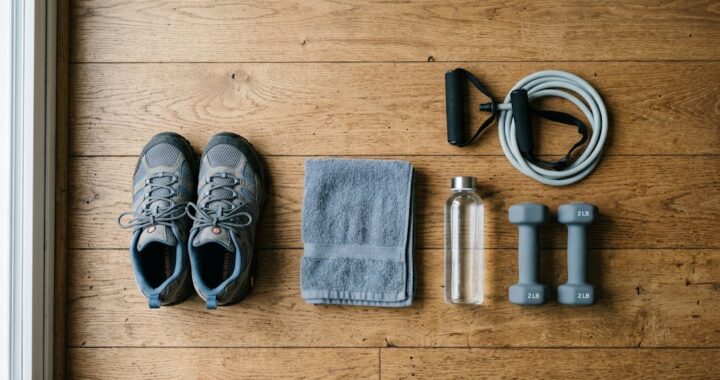
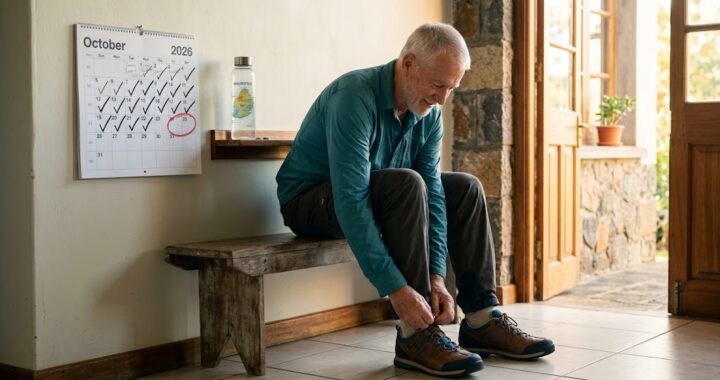
Wear supportive shoes. Look for a firm sole, good grip and enough room for your toes.
Choose a safe surface. Even pavements, well-lit paths and dry weather lower the risk of tripping. In hot or icy conditions, walk indoors, for example in a mall or along a corridor.
Carry water and a phone. Let someone know your route if you are going alone.
Use support if you need it. A walking stick or poles can improve steadiness. If you have had falls or feel unsteady, ask your doctor or a physiotherapist about balance work as well.
Warning signs: when to stop
Stop and rest if you feel dizzy, unusually short of breath, or very tired. Stop and seek medical help straight away if you have chest pain or pressure, pain spreading to the arm, jaw or back, a fast or irregular heartbeat that does not settle, or if you faint or nearly faint. If symptoms are severe or do not ease with rest, call your local emergency number.
Some medicines, such as beta blockers, can change your heart rate. If you take any heart medicine, ask your doctor whether heart-rate targets apply to you, and rely on how you feel and the talk test.
Walking is a start, not the whole plan
Walking trains your heart and lungs, but the CDC’s guidance also includes muscle-strengthening on at least 2 days a week and balance activities. If you walk regularly, adding strength and balance work covers the rest of the recommendations. You can find gentle options elsewhere on this site, such as our guides to single-leg balance exercises and the sit-to-stand exercise.
A simple 4-week starter plan
This is an example only. Adjust it to how you feel and to your doctor’s advice.
| Week | Walks per week | Time per walk | Pace |
|---|---|---|---|
| 1 | 3 to 4 | 10 minutes | Comfortable |
| 2 | 4 | 15 minutes | Comfortable, a little brisker at the end |
| 3 | 4 to 5 | 20 minutes | Brisk for part of the walk |
| 4 | 5 | 20 to 30 minutes | Brisk, able to talk but not sing |
If a week feels too much, repeat the previous week. There is no deadline.
The takeaway
For heart health, the main targets from the CDC, AHA and WHO are around 150 minutes of moderate activity a week, built up gradually. Start with the time you can manage, use the talk test to judge your pace, stop for warning signs, and check with your doctor first if you have any heart or health concerns.
Sources:
– CDC: Older Adult Activity: An Overview
– American Heart Association: Recommendations for Physical Activity in Adults and Kids
– WHO: Physical activity fact sheet
Medical disclaimer: This article is for general information and education only. It is not medical advice and does not replace advice from your doctor or physiotherapist. Stop any exercise and seek medical help if you feel chest pain, dizziness, sharp pain or unusual shortness of breath.

Arthur Sterling — Founder and Editor
Not a medical professional
I started Fitness Marble because of my grandparents, to help older adults stay independent, confident and strong in their own homes. My background is in quality assurance and project management. I am not a doctor, physiotherapist or dietitian, and nothing here is medical advice.
Read more
Growing up, my grandparents instilled in me my core values and a deep sense of responsibility as the eldest son. As they grew older, their care shaped what I want this site to do.
My career has been in quality assurance and project management. That means I check details and follow a strict process, and that is how I work here. My job is to read public guidance from trusted sources such as the CDC, the World Health Organization and the National Institutes of Health, and turn it into simple, practical routines you can actually follow.
Every article lists its sources at the bottom so you can check them yourself. You can read how articles are researched and checked on our Editorial Policy page.
I write under the pen name Arthur Sterling to protect my privacy, but I remain fully accountable for what is published here. If you spot a mistake, email me at contact@fitnessmarble.com and I will correct it promptly.
Please talk to your own doctor before starting any new exercise programme, especially if you have a health condition or take medication.