Most people know exercise is good for them. The hard part is doing it again next Tuesday. If you have started and stopped before, you are in very good company, and it usually isn’t a lack of willpower. It is usually a plan that was too big, too vague or too fragile.
This guide uses simple ideas from habit research to help you build something that lasts.
How long does a habit take?
A well-known UK study followed people trying to form a new daily habit and found it took a median of about 66 days for the behaviour to become automatic, with a huge range from person to person. Missing an occasional day didn’t derail progress. The lesson is encouraging: it takes time, it varies, and one slip is not failure.
What the guidelines are aiming at
Public health guidelines suggest older adults aim for about 150 minutes of moderate activity a week, plus strength and balance work. But that is the destination. The first goal is simply to make exercise a regular part of your day.
Seven ways to make it stick
- Start ridiculously small. Five minutes a day is better than an ambitious plan you drop. You can always do more once the habit exists.
- Link it to something you already do. After my morning tea, I do my stretches. A fixed cue removes the need to decide.
- Plan exactly when and where. “I’ll walk after lunch on the park path” beats “I’ll try to walk more”.
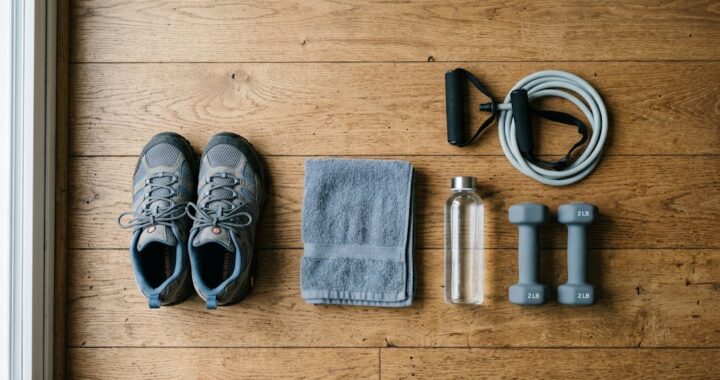
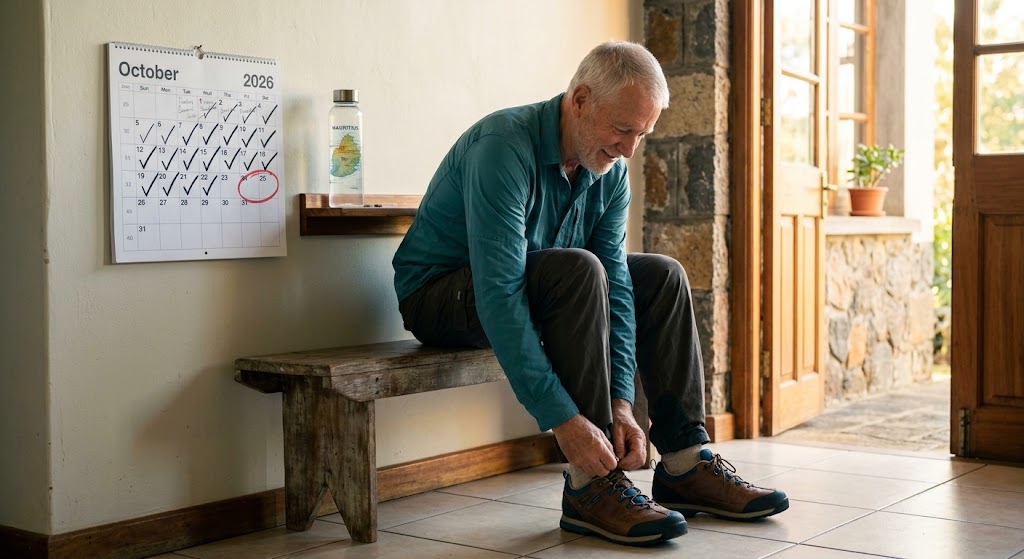
- Make it easy. Put your shoes by the door and your mat where you can see it.
- Track it. A paper calendar with a tick for each day is surprisingly motivating.
- Find company. A walking partner, a class or a daily check-in with a friend makes you more likely to turn up.
- Choose things you enjoy. If you dislike swimming, don’t plan swimming.
When helping my grandparents stay consistent, placing a simple paper calendar on the kitchen wall next to the tea kettle made all the difference—ticking off each morning’s quick 5-minute routine became a small daily victory they didn’t want to miss.
A gentle 4-week plan
| Week | Goal |
|---|---|
| 1 | 5 minutes of gentle movement on 4 days. Same time each day. |
| 2 | 10 minutes on 4 days. |
| 3 | 10 to 15 minutes on 5 days, adding a short walk. |
| 4 | 15 to 20 minutes on 5 days, adding 2 sessions of leg strength such as sit-to-stands. |
If a week feels hard, repeat it. Repeating is not failing.
When things go wrong
- You miss a day. Carry on tomorrow. A single miss changes very little.
- You miss a week. Restart at an easy level. Don’t try to make up for lost time.
- You feel sore. Reduce the effort and check the pain rule: mild discomfort that settles is fine, sharp pain is not.
- You are ill. Rest, then ease back in.
- You lose motivation. Change one thing: the time, the place, the activity or the company.
Make progress visible
At the end of each month, look back at your calendar. Note one thing that feels easier, such as climbing the stairs, standing up from a chair or walking further. That sense of progress keeps you going.
Be safe
Check with your doctor before starting if you have a heart condition, diabetes, dizziness or other health concerns, or if it has been a long time since you were active.
Stop and get medical help if you notice: chest pain or pressure, severe shortness of breath, dizziness or faintness, or sudden sharp pain.
Quick answers
What is the best time of day to exercise? The one you will keep. Many people find mornings reliable.
Do I need a gym? No. Walking, chair exercises and simple home routines are enough to begin.
Is it too late to start at 70 or 80? No. Older adults can improve strength and balance at any age.
What if I’m tired all the time? Speak to your doctor, and start with very short, gentle sessions.
Sources
Medical disclaimer: This article is for general information and education only. It is not medical advice and does not replace advice from your doctor or physiotherapist. Stop any exercise and seek medical help if you feel chest pain, dizziness, sharp pain or unusual shortness of breath.

Arthur Sterling — Founder and Editor
Not a medical professional
I started Fitness Marble because of my grandparents, to help older adults stay independent, confident and strong in their own homes. My background is in quality assurance and project management. I am not a doctor, physiotherapist or dietitian, and nothing here is medical advice.
Read more
Growing up, my grandparents instilled in me my core values and a deep sense of responsibility as the eldest son. As they grew older, their care shaped what I want this site to do.
My career has been in quality assurance and project management. That means I check details and follow a strict process, and that is how I work here. My job is to read public guidance from trusted sources such as the CDC, the World Health Organization and the National Institutes of Health, and turn it into simple, practical routines you can actually follow.
Every article lists its sources at the bottom so you can check them yourself. You can read how articles are researched and checked on our Editorial Policy page.
I write under the pen name Arthur Sterling to protect my privacy, but I remain fully accountable for what is published here. If you spot a mistake, email me at contact@fitnessmarble.com and I will correct it promptly.
Please talk to your own doctor before starting any new exercise programme, especially if you have a health condition or take medication.