Published September 10, 2026 · Updated October 15, 2026 · Checked by the editor against the listed sources
Cardio, or aerobic exercise, is any activity that raises your breathing and heart rate for a sustained period. For many older adults, running and jumping are off the table because of sore knees, hips or balance worries. The good news is that you do not need high-impact exercise to get the benefits. This guide covers five low-impact options you can do at home, plus how to know you are working at the right level.
As always, this is general education rather than personal medical advice. If you have a heart condition, uncontrolled blood pressure, balance problems or a recent injury or surgery, ask your doctor which activities suit you before you start.
How much cardio do you need?
The CDC recommends at least 150 minutes a week of moderate-intensity aerobic activity for adults aged 65 and older, or 75 minutes of vigorous activity, or an equivalent mix. The American Heart Association gives the same weekly figure. You do not have to do it in one go. Short sessions add up.
Moderate intensity means you are breathing harder but can still talk. The AHA’s talk test says that at moderate intensity you can talk while you move, but at vigorous intensity you cannot say more than a few words without catching your breath.
Before you begin
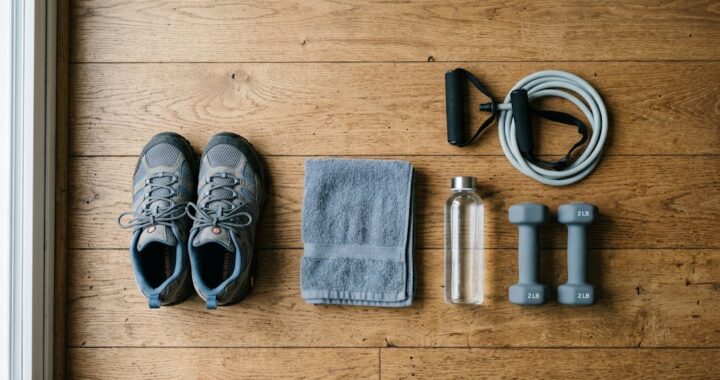
- Clear a space with a firm, non-slip floor and a sturdy chair or countertop within reach.
- Wear supportive, closed shoes rather than socks or slippers.
- Keep water nearby.
- Warm up for 3 to 5 minutes with slow marching or arm circles, and cool down with slow movement and gentle stretches.
- Have a phone close by.
Option 1: Marching in place
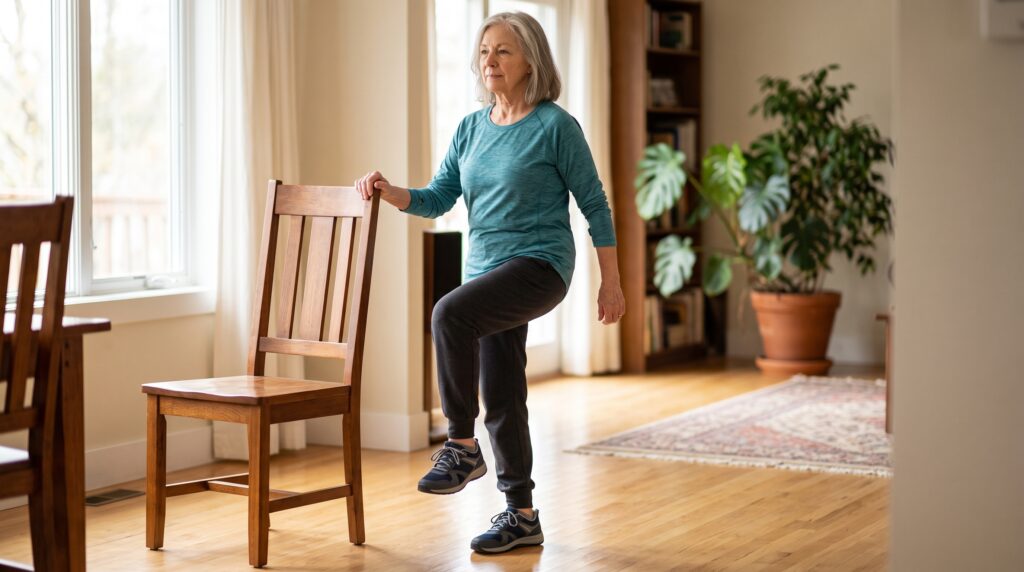
Stand tall next to a chair and lift one knee at a time, as high as is comfortable. Swing your arms gently. Start with 1 to 2 minutes, rest, and repeat. To make it easier, hold the chair. To make it a bit harder, lift your knees higher or add arm movements.
Option 2: Seated marching and arm cardio
If standing is difficult, sit tall near the front of a sturdy chair with your feet flat. March your feet in place while swinging your arms or punching forward gently. This raises your heart rate with no balance risk, and it is a good way to start if you have not exercised recently.
Option 3: Step-touch dance
Step one foot out to the side, bring the other foot to meet it, and repeat to the other side, in time with music you enjoy. Keep the steps small. The AHA lists ballroom or social dancing as an example of moderate-intensity activity, and dancing at home with a favourite playlist can be a pleasant way to move.
Option 4: Stationary cycling
A stationary bike, upright or recumbent, is gentle on the knees and hips because your body weight is supported. A recumbent bike with a back support can feel more stable. Keep the resistance low at first and pedal at a pace where you can still talk. The AHA lists biking under 10 mph as moderate-intensity activity.
Option 5: Walking indoors
If weather or terrain makes outdoor walking hard, walk laps of your home or along a long corridor. You can also walk in place while watching television, for example during commercial breaks. Our guide to walking for heart health after 60 explains how to build up your time.
Making it work for you
| If you feel… | Try… |
|---|---|
| Unsteady on your feet | Seated marching or a recumbent bike, with a chair close by |
| Sore knees | Cycling, seated cardio and smaller steps |
| Out of breath quickly | Shorter bursts of 1 to 2 minutes with rests in between |
| Bored | Music, a favourite programme, or an exercise partner |
A simple starter routine: 5 minutes of warm-up, 10 minutes of your chosen option, 3 minutes of cool-down. Add a minute or two each week as it feels comfortable.
Warning signs: when to stop
Stop and rest if you feel dizzy, lightheaded, unusually short of breath, or if a joint pain gets worse. Stop and get medical help right away if you have chest pain or pressure, pain spreading to your arm, jaw or back, a racing or irregular heartbeat that does not settle, or if you feel faint. If symptoms are severe or do not ease with rest, call your local emergency number.
Do not skip strength and balance
Cardio is one part of the picture. The CDC also recommends muscle-strengthening activities on at least 2 days a week and activities that improve balance. If you are adding cardio, consider adding a short strength or balance session too. You can start with our sit-to-stand exercise guide.
The takeaway
You do not need high-impact exercise to look after your heart. Marching, seated cardio, gentle dancing, stationary cycling and indoor walking can all raise your heart rate safely when done at a talking pace. Start small, add time gradually, stop for warning signs, and check with your doctor first if you have health concerns.
Sources:
– CDC: Older Adult Activity: An Overview
– American Heart Association: Recommendations for Physical Activity in Adults and Kids
Medical disclaimer: This article is for general information and education only. It is not medical advice and does not replace advice from your doctor or physiotherapist. Stop any exercise and seek medical help if you feel chest pain, dizziness, sharp pain or unusual shortness of breath.

Arthur Sterling — Founder and Editor
Not a medical professional
I started Fitness Marble because of my grandparents, to help older adults stay independent, confident and strong in their own homes. My background is in quality assurance and project management. I am not a doctor, physiotherapist or dietitian, and nothing here is medical advice.
Read more
Growing up, my grandparents instilled in me my core values and a deep sense of responsibility as the eldest son. As they grew older, their care shaped what I want this site to do.
My career has been in quality assurance and project management. That means I check details and follow a strict process, and that is how I work here. My job is to read public guidance from trusted sources such as the CDC, the World Health Organization and the National Institutes of Health, and turn it into simple, practical routines you can actually follow.
Every article lists its sources at the bottom so you can check them yourself. You can read how articles are researched and checked on our Editorial Policy page.
I write under the pen name Arthur Sterling to protect my privacy, but I remain fully accountable for what is published here. If you spot a mistake, email me at contact@fitnessmarble.com and I will correct it promptly.
Please talk to your own doctor before starting any new exercise programme, especially if you have a health condition or take medication.