Published October 25, 2026 · Updated October 8, 2026 · Checked by the editor against the listed sources
Protein is the building material for muscle, and muscle matters more as you age. It helps you stand up from a chair, carry your shopping, recover from illness and stay independent. Yet many older adults eat less protein than they need, because appetite falls, cooking feels like a chore, or meals become smaller and simpler.
This guide explains how much protein older adults generally need, how to get it from ordinary food, and who needs to be careful.
How much protein do older adults need?
The official minimum, the Recommended Dietary Allowance (RDA), is 0.8 grams of protein per kilogram of body weight per day for adults. But the PROT-AGE Study Group, an international expert panel, concluded that healthy older adults may do better with more: around 1.0 to 1.2 grams per kilogram a day. People with acute or chronic illness may need more, up to 1.2 to 1.5 g/kg, unless they have severe kidney disease.
Here’s what that looks like in practice:
| Body weight | RDA (0.8 g/kg) | Suggested range (1.0 to 1.2 g/kg) |
|---|---|---|
| 60 kg (132 lb) | 48 g | 60 to 72 g |
| 70 kg (154 lb) | 56 g | 70 to 84 g |
| 80 kg (176 lb) | 64 g | 80 to 96 g |
These are general figures for healthy older adults, not personal medical advice. Your own needs depend on your health, activity and medications.
Spread it across the day
Research suggests that spreading protein through the day, with roughly 25 to 30 grams at each main meal, may be better for muscle than eating most of it at dinner. That doesn’t mean you need to weigh everything. It just means don’t skip protein at breakfast.
Practical protein foods
Amounts are approximate. Check labels and the USDA FoodData Central database for specifics.
| Food | Typical portion | Protein (approx.) |
|---|---|---|
| Egg | 1 large | 6 g |
| Greek yogurt, plain | 170 g (about 3/4 cup) | 15 to 17 g |
| Cottage cheese | 1/2 cup | 12 to 14 g |
| Milk | 1 cup | 8 g |
| Chicken breast, cooked | 100 g | about 30 g |
| Canned tuna | 100 g | about 25 g |
| Lentils, cooked | 1 cup | about 18 g |
| Firm tofu | 1/2 cup | 10 to 20 g (varies) |
When talking with older adults, the most common barrier I hear isn’t a dislike of protein, but rather that traditional breakfast foods like toast and jam contain almost none, and cooking meat for every meal feels like too much effort. A very simple fix is adding a cup of Greek yogurt or stirring a couple of eggs into your morning routine, which hits that protein target before the day has even properly started.
Easy ways to add protein
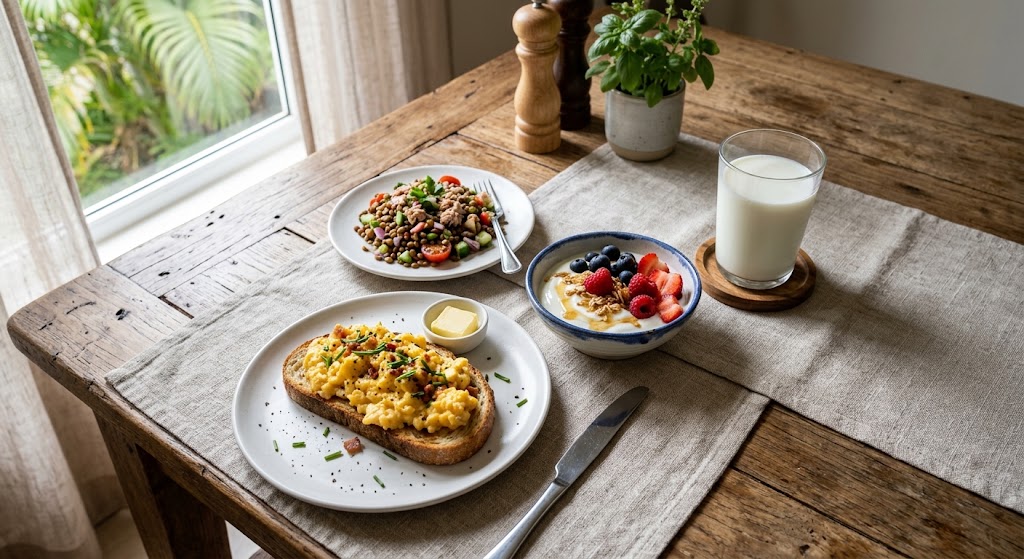
- Breakfast: eggs on toast, Greek yogurt with fruit, or porridge made with milk.
- Lunch: a tuna or bean salad, soup with lentils, or a cheese and chicken sandwich.
- Dinner: fish, chicken, tofu or beans with vegetables and a starchy side.
- Snacks: cottage cheese, a boiled egg, a glass of milk, or a handful of nuts.
- Poor appetite or chewing problems: soft options like scrambled eggs, yogurt, soups and smoothies with milk or yogurt can help.
Does protein alone build muscle?
No. Eating enough protein supports muscle, but the strongest effect comes when you combine it with strength exercise such as sit-to-stands or resistance bands. Protein without exercise helps less than the two together.
Do I need a protein supplement?
Most people can meet their needs with food. Supplements can help if you have a poor appetite, have lost weight unintentionally, or are recovering from illness. If you’re considering one, talk to your doctor or a registered dietitian, because some contain added sugar, sodium or other ingredients.
Who should be careful
Talk to your doctor before increasing protein if you have: chronic kidney disease or reduced kidney function, liver disease, diabetes with medication changes, or if you’ve been advised to follow a special diet. If you have unintentional weight loss, ongoing loss of appetite, or trouble swallowing, see your doctor, since these can signal a health issue.
Quick answers
Is plant protein as good as animal protein? Plant proteins can meet your needs, though you may need larger portions and a good variety, such as beans, lentils, tofu and whole grains.
Can too much protein hurt healthy kidneys? In people with healthy kidneys, intakes in the suggested range haven’t been shown to cause harm, but it’s wise to avoid extremes.
What if I’m trying to lose weight? Don’t cut protein. Ask a doctor or dietitian for guidance, especially at an older age.
How do I know if I’m eating enough? Track your meals for a few days. A dietitian can also help assess your intake.
Sources
Medical disclaimer: This article is for general information and education only. It is not medical advice and does not replace advice from your doctor or physiotherapist. Stop any exercise and seek medical help if you feel chest pain, dizziness, sharp pain or unusual shortness of breath.

Arthur Sterling — Founder and Editor
Not a medical professional
I started Fitness Marble because of my grandparents, to help older adults stay independent, confident and strong in their own homes. My background is in quality assurance and project management. I am not a doctor, physiotherapist or dietitian, and nothing here is medical advice.
Read more
Growing up, my grandparents instilled in me my core values and a deep sense of responsibility as the eldest son. As they grew older, their care shaped what I want this site to do.
My career has been in quality assurance and project management. That means I check details and follow a strict process, and that is how I work here. My job is to read public guidance from trusted sources such as the CDC, the World Health Organization and the National Institutes of Health, and turn it into simple, practical routines you can actually follow.
Every article lists its sources at the bottom so you can check them yourself. You can read how articles are researched and checked on our Editorial Policy page.
I write under the pen name Arthur Sterling to protect my privacy, but I remain fully accountable for what is published here. If you spot a mistake, email me at contact@fitnessmarble.com and I will correct it promptly.
Please talk to your own doctor before starting any new exercise programme, especially if you have a health condition or take medication.
