Published October 21, 2026 · Updated October 8, 2026 · Checked by the editor against the listed sources
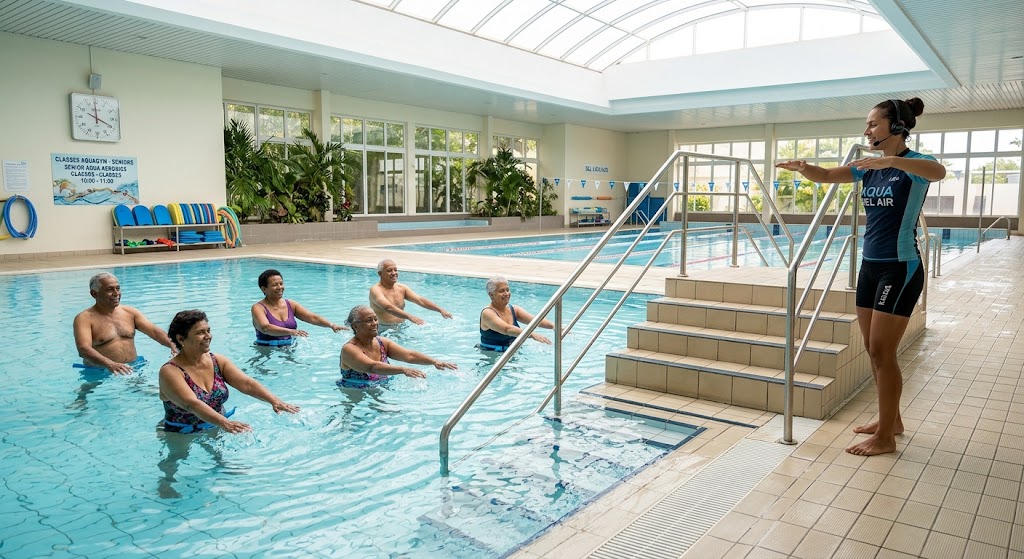
Anyone with sore joints knows the dilemma. You’re told to stay active, but stairs hurt, walking hurts, and standing on a hard floor for exercise makes it worse. Water offers a way around it. In a pool, your body weighs a fraction of what it does on land, so your joints carry far less load while your muscles still do the work.
This guide explains what water exercise can and can’t do, how to get started safely, and gives you a simple routine to try.
Why water works for sore joints
When you stand in water up to your chest, buoyancy takes much of the weight off your hips, knees and ankles. Water also provides gentle resistance in every direction, so you can build strength without heavy weights. Warm water can ease stiffness and relax muscles.
What the evidence says
A Cochrane review of aquatic exercise for knee and hip osteoarthritis found that it probably gives small short-term improvements in pain, physical function and quality of life. The effects were modest, not dramatic, and the researchers noted that more long-term research is needed. In plain terms, water exercise is a safe, reasonable option that many people enjoy, and it’s a good choice if land exercise is too painful. It isn’t a miracle cure.
NICE recommends exercise, including strengthening and general activity, as a core part of osteoarthritis care, and water-based options are one way to do it.
Who should check first
Talk to your doctor before starting if you have:
- A heart condition, uncontrolled high blood pressure or breathing problems
- A recent joint replacement or surgery
- Open wounds, skin infections or incontinence issues
- Dizziness or fainting episodes
- Inflammatory arthritis that is flaring
Finding the right pool
- Water temperature: warm water, typically around 28 to 32 degrees Celsius (about 83 to 90 degrees Fahrenheit), is comfortable for most arthritis classes. Very hot spas are not suitable for exercise.
- Depth: chest-deep is ideal for most moves.
- Access: look for steps with handrails or a ramp, and non-slip surfaces.
- Supervision: a lifeguard on duty, or a class run by a trained instructor.
- Classes: ask local pools, leisure centres or arthritis charities about arthritis-friendly or older-adult aqua sessions.
A simple 20-minute routine
Stay near the wall. Move slowly and smoothly through each exercise.
- Water walking. Walk forward, backward and sideways across the pool. Do this for 3 to 5 minutes as a warm-up.
- Leg swings. Holding the wall, swing one leg forward and back, 10 times each side.
- Side leg lifts. Holding the wall, lift one leg out to the side and bring it back. 10 per side.
- Arm curls. With your arms underwater, bend and straighten your elbows, 10 to 15 times. Cup your hands for more resistance.
- Wall squats. Stand with your back against the pool wall and bend your knees slightly as if sitting. 8 to 10 reps.
- Cool down. Walk slowly for 2 to 3 minutes, then do gentle shoulder rolls.
For anyone nervous about getting into a pool after a long time away, the best trick is to spend the first five minutes simply standing near the steps and doing the water walking phase while holding the edge. Once you feel the water’s buoyancy take the pressure off your knees and lower back, the anxiety tends to wash away.
How often
Aim for 2 to 3 sessions a week, 20 to 45 minutes each. Start with shorter sessions and build up over several weeks.
Safety tips
- Wear water shoes or non-slip footwear to protect your feet.
- Shower after swimming, and moisturise your skin, since pool chemicals dry it out.
- Drink water. You can become dehydrated in a pool without noticing.
- Get out slowly, and use the handrails.
- If you feel cold, dizzy or unwell, leave the pool.
- Never exercise alone in deep water.
Stop and get medical help if you feel: chest pain or pressure, severe breathlessness, dizziness or faintness, a sudden sharp joint pain, or numbness. Leave the water carefully and tell the lifeguard or instructor.
Easier and harder options
Easier: shorter sessions, hold the wall for most exercises, and smaller movements.
Harder: use water weights or foam dumbbells, move a little faster, or add more repetitions.
Quick answers
Do I need to know how to swim? No. Most arthritis exercise happens in chest-deep water and doesn’t involve swimming.
Will water exercise cure my arthritis? No. It may help reduce pain and improve movement, but it doesn’t change the underlying condition.
What if I feel sore afterward? Mild muscle soreness is normal. If joints are clearly more painful the next day, reduce the intensity.
Is a hot tub the same thing? No. Hot tubs can feel soothing, but they’re too warm for exercise and aren’t suitable for everyone, such as people with heart conditions.
Sources
Medical disclaimer: This article is for general information and education only. It is not medical advice and does not replace advice from your doctor or physiotherapist. Stop any exercise and seek medical help if you feel chest pain, dizziness, sharp pain or unusual shortness of breath.

Arthur Sterling — Founder and Editor
Not a medical professional
I started Fitness Marble because of my grandparents, to help older adults stay independent, confident and strong in their own homes. My background is in quality assurance and project management. I am not a doctor, physiotherapist or dietitian, and nothing here is medical advice.
Read more
Growing up, my grandparents instilled in me my core values and a deep sense of responsibility as the eldest son. As they grew older, their care shaped what I want this site to do.
My career has been in quality assurance and project management. That means I check details and follow a strict process, and that is how I work here. My job is to read public guidance from trusted sources such as the CDC, the World Health Organization and the National Institutes of Health, and turn it into simple, practical routines you can actually follow.
Every article lists its sources at the bottom so you can check them yourself. You can read how articles are researched and checked on our Editorial Policy page.
I write under the pen name Arthur Sterling to protect my privacy, but I remain fully accountable for what is published here. If you spot a mistake, email me at contact@fitnessmarble.com and I will correct it promptly.
Please talk to your own doctor before starting any new exercise programme, especially if you have a health condition or take medication.
