
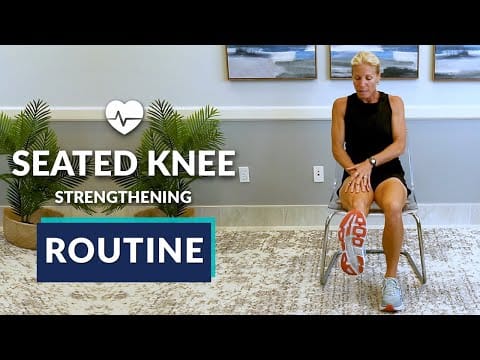
Introduction: Are you tired of that persistent ache in your knees? Does the thought of walking up stairs or even just standing for too long fill you with dread? You’re not alone. Knee pain is a common, debilitating issue that can steal your joy and limit your life. The good news? You don’t have to suffer in silence, nor do you need to endure high-impact, strenuous workouts to find relief. As Dr. Adrian, your senior fitness specialist, I’m here to tell you that strengthening your knees safely and effectively can begin right where you are – sitting down! Say goodbye to your knee pain with these gentle yet powerful seated strengthening exercises. Your knees could feel better than ever, follow along with Dr. Adrian and reclaim your comfort and mobility.
The Science: Why This Happens
Before we dive into the exercises, let’s understand *why* your knees might be hurting and how these seated movements can help. Your knees are complex hinge joints, relying heavily on the strength and stability of the surrounding muscles, ligaments, and tendons. When these supporting structures, particularly your quadriceps (front of thigh), hamstrings (back of thigh), and glutes, become weak or imbalanced, the knee joint takes on excessive stress. This can lead to wear and tear, inflammation, and pain associated with conditions like osteoarthritis, patellofemoral pain syndrome, or general muscular imbalance.
The beauty of seated knee strengthening lies in its low-impact nature. By performing exercises from a seated position, we significantly reduce the weight-bearing load on your knees. This allows you to engage and strengthen the crucial muscles that stabilize and protect the joint without aggravating existing pain or risking further injury. It fosters a controlled environment for muscle activation, helping to rebuild strength, improve joint mechanics, and ultimately reduce pain, giving your knees the support system they desperately need. It’s about empowering your body to heal and protect itself, one controlled movement at a time.
The Routine: Step-by-Step Guide
Ready to give your knees the love they deserve? Here are Dr. Adrian’s recommended safe, seated knee strengthening exercises. Remember, consistency is key, and quality over quantity always wins. Perform these exercises 3-4 times per week, allowing a day of rest in between.
* **1. Quad Sets (Static Quad Contraction):**
* **How to Perform:** Sit comfortably in a chair with your feet flat on the floor. Extend one leg straight out in front of you, with your heel on the floor. Now, press the back of your knee down into the chair or floor, and consciously tighten the muscle on top of your thigh (your quadriceps). You should feel your kneecap pull up slightly.
* **Hold:** Hold this contraction for 5-10 seconds, focusing on really squeezing the muscle.
* **Release:** Slowly relax for a few seconds.
* **Repetitions:** Aim for 10-15 repetitions per leg.
* **Sets:** Complete 2-3 sets for each leg.
* **Focus:** This foundational exercise teaches you to activate your quads without movement, crucial for building strength and stability.
* **2. Seated Straight Leg Raises:**
* **How to Perform:** Sit tall in your chair, engaging your core. Extend one leg straight out in front of you, keeping your knee as straight as possible and your toes pointed towards the ceiling.
* **Lift:** Slowly lift your extended leg a few inches off the floor, feeling the engagement in your quad. Ensure your back remains against the chair and you’re not arching.
* **Lower:** Gently and slowly lower your leg back down until your heel just touches the floor. Avoid letting it “plop.”
* **Repetitions:** Perform 10-15 repetitions per leg.
* **Sets:** Complete 2-3 sets for each leg.
* **Progression:** As you get stronger, you can add an ankle weight (1-2 lbs) for extra challenge.
* **3. Seated Knee Extensions (Controlled):**
* **How to Perform:** Sit with both feet flat on the floor, hip-width apart. Choose one leg to work.
* **Extend:** Slowly extend your chosen leg straight out in front of you until it’s parallel to the floor, or as straight as comfortably possible, squeezing your quadriceps at the top.
* **Hold:** Hold the extended position for 1-2 seconds.
* **Return:** Slowly and with control, bend your knee and return your foot to the starting position on the floor.
* **Repetitions:** Do 10-12 repetitions per leg.
* **Sets:** Complete 2-3 sets for each leg.
* **Tip:** Imagine you’re pushing against a small amount of resistance throughout the movement.
* **4. Seated Hamstring Curls (with Resistance Band):**
* **How to Perform:** Sit firmly in your chair. Loop a light resistance band around the ankle of one leg, anchoring the other end around the leg of the chair or simply holding it firmly with your hands.
* **Curl:** Keeping your thigh on the chair, bend your knee and pull your heel back towards the chair as far as comfortable, feeling the back of your thigh (hamstring) engage against the band’s resistance.
* **Release:** Slowly and controllably extend your leg back to the starting position, allowing the band to gently guide it.
* **Repetitions:** Perform 10-15 repetitions per leg.
* **Sets:** Complete 2-3 sets for each leg.
* **Note:** Hamstring strength is vital for knee stability and preventing imbalances with the quads.
* **5. Inner Thigh Squeeze (Adduction):**
* **How to Perform:** Sit with your feet flat on the floor, knees bent at 90 degrees. Place a small pillow, rolled towel, or a soft ball between your knees.
* **Squeeze:** Gently but firmly squeeze the pillow/ball between your knees, engaging your inner thigh muscles (adductors). Ensure your feet remain flat and your hips don’t lift.
* **Hold:** Hold the squeeze for 5-10 seconds.
* **Release:** Slowly release the pressure.
* **Repetitions:** Do 10-15 repetitions.
* **Sets:** Complete 2-3 sets.
* **Benefit:** Strengthening the inner thighs helps with knee alignment and stability.
Dr. Adrian’s Pro Tip 💡
Here’s my unique advice for truly maximizing these seated exercises: **Cultivate a Deep Mind-Muscle Connection and Embrace Micro-Progressions.** Don’t just go through the motions. Before you even begin, consciously *think* about the muscle you’re targeting. As you perform each repetition, visualize that muscle contracting and working. Feel it tighten, then feel it lengthen. This mindful engagement ensures you’re activating the correct muscles, rather than compensating with others, leading to more effective strengthening and reducing the risk of injury. Furthermore, understand that progress isn’t always about adding heavy weights. Micro-progressions can include: increasing your hold time by an extra second, slowing down the movement even further for increased time under tension, focusing on a more intense squeeze, or adding just one more repetition to a set. These small, deliberate steps prevent plateaus, maintain safety, and build sustainable strength without overwhelming your recovering knees.
Common Mistakes to Avoid
To ensure these exercises truly benefit your knees, steer clear of these common pitfalls:
* **Pushing Through Pain:** This is perhaps the most critical mistake. A little discomfort is normal when muscles are working, but sharp, increasing, or joint pain is a red flag. Stop immediately if you experience it. These exercises are about *alleviating* pain, not causing it.
* **Rushing Movements:** Speed reduces control and effectiveness. Every movement should be slow, deliberate, and controlled, both on the way up and on the way down.
* **Holding Your Breath:** Remember to breathe! Inhale during the preparatory phase and exhale during the exertion phase (e.g., when lifting the leg or squeezing). Proper breathing helps stabilize your core and supplies oxygen to your working muscles.
* **Poor Posture:** Slouching or arching your back can negate the benefits and put strain on your spine. Sit tall, engage your core, and keep your back supported by the chair.
* **Overdoing It Too Soon:** While enthusiasm is great, starting with too many reps, sets, or too much resistance can lead to muscle soreness and discouragement. Begin gently and gradually increase as your strength improves.
* **Ignoring Warm-up and Cool-down:** Even seated exercises benefit from a gentle warm-up (like ankle circles or march in place) and a cool-down (gentle knee bends, hamstring stretches).
Frequently Asked Questions
**Q: How often should I do these exercises?**
A: Aim for 3-4 times per week, with at least one rest day in between sessions to allow your muscles to recover and rebuild.
**Q: What if I feel pain during an exercise?**
A: Stop immediately. Listen to your body. Pain means something is wrong. You might need to reduce the range of motion, decrease resistance, or consult a healthcare professional.
**Q: Can I use weights or resistance bands?**
A: Yes, once the bodyweight movements feel easy and pain-free, you can gradually introduce light ankle weights (1-3 lbs) or a light resistance band. Always start with the lightest option and ensure your form remains perfect.
**Q: How long until I see results?**
A: Consistency is key! While some may feel subtle improvements in comfort within a few weeks, significant strength gains and pain reduction typically take 6-12 weeks. Be patient and persistent.
**Q: Are these exercises suitable for specific conditions like arthritis or after surgery?**
A: These exercises are generally safe and beneficial for many conditions. However, if you have a specific diagnosis like severe arthritis, a recent injury, or are recovering from surgery, you *must* consult your physician or physical therapist before starting any new exercise program. They can provide personalized guidance.
**Q: Do I need any special equipment?**
A: Not necessarily! A sturdy chair is the main requirement. A small pillow or rolled towel can be used for the inner thigh squeeze, and a light resistance band is optional for more challenging exercises.
Conclusion
Ending knee pain doesn’t have to be a daunting task. With these safe, seated strengthening exercises, you have a powerful, accessible tool to rebuild strength, improve stability, and find lasting relief. Remember, your journey to stronger, healthier knees is a marathon, not a sprint. Be consistent, listen to your body, and celebrate every small victory. You are taking a proactive step towards a more comfortable and mobile life. Start today, and let these exercises be your pathway to saying goodbye to knee pain. Your knees will thank you.
Warmly,
Dr. Adrian, Senior Fitness Specialist
Watch the Routine in Action
Follow along with this video to ensure you are using the correct form.
Related Articles You Might Find Useful
- Wake Up & Thrive: Your Morning Stretch Guide for Senior Lower Back Pain Relief
- Walk Tall, Live Strong: Dr. Adrian’s Guide to Unshakeable Balance Over 60
- Unlock Serenity: Dr. Adrian’s Simple Chair Yoga for Lasting Neck Pain Relief

There is definately a lot to find out about this subject. I like all the points you made
Great information shared.. really enjoyed reading this post thank you author for sharing this post .. appreciated