Boost Balance & Joint Health: 5 Daily Steps for Lasting Mobility
Do you find yourself hesitating before reaching for something high, or feeling that familiar stiffness when you first get out of bed? Many of us experience the creeping fear of a fall or the frustration of diminished mobility as we age. But what if I told you that maintaining your vibrant, independent lifestyle and nurturing your joint health doesn’t require hours of grueling exercise? This simple, empowering 5-step daily routine is specifically designed to alleviate discomfort, enhance your balance, and keep you moving with confidence.
Reclaiming Your Freedom: The Science of Age-Defying Mobility
Our bodies are incredible machines, designed for movement. As we age, however, factors like reduced synovial fluid in joints, decreased muscle mass (sarcopenia), and diminishing bone density can lead to stiffness, pain, and a higher risk of injury. The beauty of a targeted, consistent exercise routine lies in its ability to counteract these natural processes. By engaging in specific movements that strengthen supporting muscles, improve proprioception (your body’s sense of position), and encourage healthy joint lubrication, we create a resilient framework. This proactive approach not only significantly reduces the risk of falls—a primary concern for independent living—but also actively supports joint maintenance, helping to mitigate the progression of conditions like osteoarthritis and ensuring you retain the strength and flexibility needed for a truly independent life, full of joy and activity.
Your Empowering 5-Step Daily Routine for Joint Health
-
1. Master Your Balance for Fall Prevention
What to do: Start by holding onto a sturdy surface like a kitchen counter. Gently shift your weight to one leg, lifting the other foot just an inch or two off the ground. Hold for 10-15 seconds, then switch legs. As you gain confidence, try to progressively reduce your reliance on support, eventually aiming for hands-free balance. Engage your core gently, and keep your gaze steady on a point in front of you. Aim for 3-5 repetitions on each leg.
Why it helps: Balance is a complex skill that involves your inner ear, eyes, and proprioceptors in your muscles and joints. As we age, these systems can become less efficient, increasing fall risk. This exercise directly trains these systems, strengthening the smaller stabilizing muscles around your ankles, knees, and hips. Think of it as tuning your body’s internal GPS, allowing you to react more quickly and effectively to uneven surfaces or unexpected bumps, significantly enhancing your fall prevention strategy and boosting your confidence in everyday movements.
-
2. Boost Lower Leg Strength & Circulation with Calf Raises
What to do: Stand tall, holding onto a chair or wall for support if needed. Slowly lift your heels off the ground, rising onto the balls of your feet as high as comfortable. Hold briefly at the top, feeling the squeeze in your calves, then slowly lower your heels back down. Focus on control, not speed. Perform 10-15 repetitions, for 2-3 sets.
Why it helps: Your calf muscles are often called your “second heart” because they play a crucial role in pumping blood back up to your heart, improving overall circulation throughout your body and especially in your lower legs. This not only helps reduce swelling in the ankles and feet but also supports healthy blood flow, which is vital for tissue repair and joint health. Strong calves also provide a stable foundation for walking and standing, improving your gait and reducing strain on your knees and hips.
-
3. Open Your Chest and Reduce Stooping for Better Posture
What to do: Stand with your back against a wall, heels about 6 inches away. Try to press your head, shoulders, and hips against the wall. Now, with your arms bent at 90 degrees, slide them up the wall as if making a “snow angel,” keeping your wrists and elbows in contact. Reach as high as you comfortably can, then slowly slide them back down. Alternatively, perform gentle chest stretches by standing in a doorway, placing your forearms on the frame, and gently stepping forward.
Why it helps: Many of us spend hours hunched over screens, leading to a rounded upper back (kyphosis) and forward-head posture. This stooping can restrict breathing, cause neck and back pain, and even compress internal organs. These exercises gently reverse that posture, strengthening your upper back muscles and stretching your chest, allowing your shoulders to pull back and down. This improves lung capacity, alleviates spinal compression, and helps you stand taller and more confidently, which is key for maintaining an active and pain-free independent living.
-
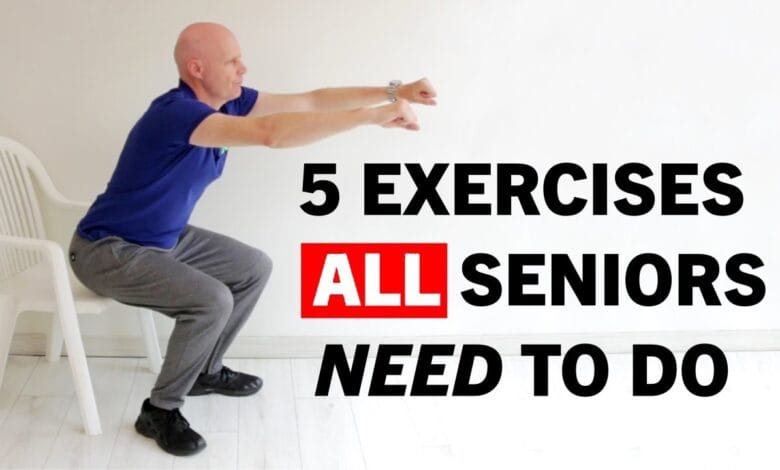
4. Enhance Leg Strength & Mobility with Chair Squats
What to do: Stand in front of a sturdy chair, feet shoulder-width apart. Imagine you’re about to sit down, slowly lowering your hips towards the chair. Keep your chest lifted and your core engaged. Just before your bottom touches the chair, push through your heels and glutes to stand back up. If you need assistance, gently tap the chair and stand back up, or use your hands on your thighs for support. Aim for 10-15 repetitions, for 2-3 sets.
Why it helps: This functional exercise directly mimics everyday movements like standing up from a chair or toilet, getting out of a car, or bending to pick something up. It’s a fantastic way to build strength in your quadriceps, hamstrings, and glutes—the major muscles supporting your knee and hip joints. By consistently performing chair squats, you not only improve muscular strength but also enhance the mobility and stability of these crucial joints, making daily tasks easier and safer, and significantly contributing to your overall independent living.
-
5. Strengthen Your Upper Body & Core for Overall Stability
What to do: For your upper body, try wall push-ups: Stand facing a wall, about arm’s length away, hands flat on the wall at shoulder height. Lean towards the wall, bending your elbows, then push back to the starting position. For your core, try seated marches: Sit tall in a chair, feet flat on the floor. Gently lift one knee towards your chest, then lower it, alternating legs. Focus on engaging your abdominal muscles. Aim for 10-15 repetitions of each, for 2-3 sets.
Why it helps: A strong upper body and core are indispensable for everyday life. Upper body strength allows you to carry groceries, reach overhead, or push open a heavy door without strain, protecting your shoulder and elbow joints. Your core muscles (abdomen and back) act as a natural corset, stabilizing your spine and pelvis. A strong core is fundamental for good posture, balance, and preventing back pain, which can severely impact your mobility and quality of life. These exercises ensure you have the foundational strength to move through your day with ease and confidence.
Embracing these five simple exercises daily is more than just a routine; it’s an investment in your future self—a commitment to vitality, comfort, and the freedom to live life on your terms. Remember, progress isn’t about perfection, but consistency. Listen to your body, celebrate every small improvement, and know that each step you take is building a stronger, more mobile, and independent you. Start today, take it slow, and revel in the incredible journey towards lasting joint health and renewed confidence!
Watch the Full Routine Here
Source: Original content expanded from YouTube video: 5 ESSENTIAL Exercises For People Over 60