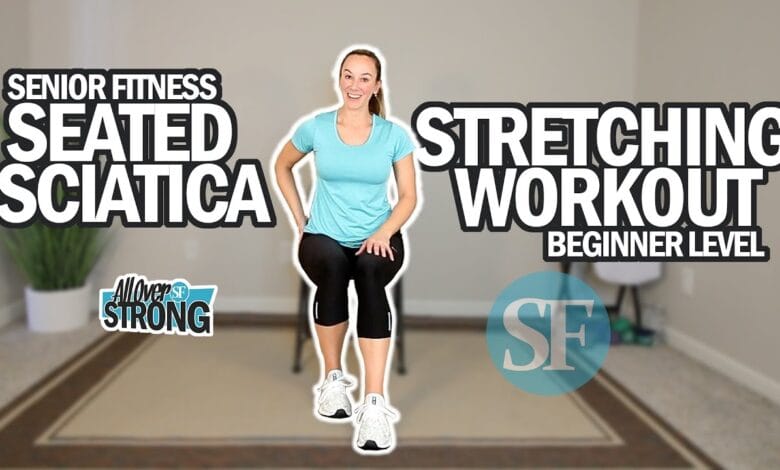
Seated Stretches for Sciatica Relief & Lasting Joint Health
Feeling that familiar twinge in your lower back or the shooting pain down your leg? Sciatica can steal your joy and independence, making even simple movements a challenge. But what if a gentle, accessible routine could offer profound relief and restore your confidence? This seated exercise program is specifically designed to alleviate sciatica discomfort, improve your flexibility, and safeguard your joint health, all from the comfort of your own chair.
The Gentle Science Behind Pain-Free Sciatica Relief
Addressing sciatica pain isn’t just about temporary relief; it’s a vital step towards maintaining your overall mobility, promoting robust joint maintenance, and securing your independent living for years to come. Gentle, consistent movement helps to decompress the sciatic nerve, improve blood flow to the affected areas, and nourish the surrounding tissues, including your spinal discs and hip joints. Expert consensus highlights that regular, low-impact exercise can significantly reduce chronic pain, enhance flexibility, and build the foundational strength needed for better balance and fall prevention. By targeting the muscles that often contribute to sciatic compression, such as the piriformis and hamstrings, we can create space and ease tension, allowing your body to move more freely and confidently throughout your day.
Your Gentle Seated Routine for Sciatica & Joint Comfort
- Mindful Preparation & Diaphragmatic Breathing: Before you begin any stretch, settle into a sturdy chair with both feet flat on the floor, ensuring your spine is comfortably elongated. Close your eyes for a moment and take 3-5 slow, deep diaphragmatic breaths. Inhale deeply through your nose, feeling your belly rise, and exhale slowly through your mouth. This isn’t just about relaxation; it calms your nervous system, reduces muscle guarding, and oxygenates your tissues, making your body more receptive to stretching. My experience has shown that simply focusing on breath can halve initial tension and improve range of motion.
- Gentle Seated Piriformis Stretch (Figure-4): This is a cornerstone for sciatica relief. Cross your right ankle over your left knee, creating a “figure-4” shape. Keep your back straight, and gently lean forward from your hips, not your waist, until you feel a comfortable stretch in your right glute and outer hip. Hold for 20-30 seconds, breathing into the stretch. This targets the piriformis muscle, which often compresses the sciatic nerve. If this feels too intense, simply rest your foot on the opposite calf. Remember, we’re aiming for a gentle release, not a deep burn.
- Subtle Seated Spinal Twist: Sit tall, with both feet on the floor. Gently twist your torso to the right, placing your right hand on the back of your chair and your left hand on the outside of your right knee. Use your core to initiate the twist, not just your arms. Keep your spine long and avoid forcing the rotation. Hold for 15-20 seconds, breathing gently, then slowly return to center and repeat on the other side. This movement encourages mobility in your lumbar spine and can release tension that contributes to lower back stiffness, indirectly supporting better nerve health.
- Supported Seated Hamstring Stretch: Extend one leg straight out in front of you, with your heel on the floor and toes pointing up. Keeping your back straight, gently lean forward from your hips, reaching towards your toes. You should feel a stretch along the back of your thigh. Hold for 20-30 seconds, then switch legs. Tight hamstrings can pull on your pelvis, exacerbating lower back pain and affecting posture. By gently lengthening them, you reduce this strain and improve the alignment of your hips and spine, which is crucial for overall joint health.
- Pelvic Tilts & Core Awareness: While seated, gently rock your pelvis forward and backward. As you rock forward, arch your lower back slightly, and as you rock backward, flatten your lower back, engaging your abdominal muscles. These are small, controlled movements. Perform 10-15 repetitions. This simple exercise mobilizes the sacrum, the triangular bone at the base of your spine, and encourages gentle engagement of your deep core muscles. A strong, flexible core is your body’s natural brace, protecting your lower back and improving balance, which is essential for fall prevention and confident independent living.
Remember, consistency is your greatest ally on the path to lasting relief and renewed mobility. Start today, take it slow, listen to your body, and celebrate every small step toward greater comfort and independence. You deserve to move through life with ease and joy.
Watch the Full Routine Here
Source: Original content expanded from YouTube video: Seated Sciatica Stretching Workout For Seniors | Beginner Level |12Min