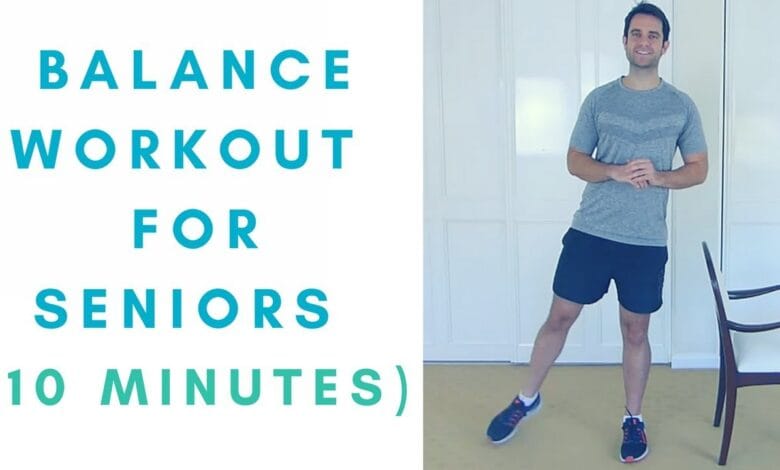
Regain Balance & Mobility: Your 10-Min Joint Health Routine
Are you experiencing stiffness, a nagging fear of falling, or simply longing for the freedom of movement you once enjoyed? It’s a common concern as we age, but it doesn’t have to define your later years. This gentle yet powerful 10-minute routine is your accessible solution to enhancing joint health, improving balance, and reclaiming the confidence needed for a vibrant, independent life, all from the comfort of your home.
The Foundation of Fearless Movement: Why Balance Matters
Maintaining balance isn’t just about avoiding falls; it’s a cornerstone of overall joint health and independent living. As we age, our proprioception—our body’s ability to sense its position in space—can diminish, impacting joint stability and increasing the risk of injury. This routine targets the intricate systems responsible for balance: our inner ear (vestibular system), our vision, and the sensory input from our muscles and joints. By consistently challenging these systems, we strengthen the stabilizing muscles around our ankles, knees, and hips, providing crucial support that directly contributes to fall prevention. Expert consensus emphasizes that regular balance and strength training is paramount for slowing age-related decline, ensuring our joints remain robust and our bodies capable of navigating life’s challenges with grace and confidence for sustained joint maintenance.
Your Daily Path to Stronger Joints & Steadfast Balance
-
Marching on the Spot (Warm-Up): Before diving into any exercise, a proper warm-up is non-negotiable for joint health. Marching on the spot gently elevates your heart rate, increases blood flow to your muscles, and, crucially, stimulates the production of synovial fluid within your joints. This natural lubricant reduces friction and prepares your cartilage for movement, significantly decreasing the risk of strain or injury. Focus on lifting your knees comfortably high and swinging your arms naturally to engage your core and improve coordination from the outset.
-
Single Leg Stand: This seemingly simple exercise is a powerhouse for balance and hip stability. By standing on one leg, you’re actively engaging your core, ankle stabilizers, and the often-underutilized gluteus medius muscle in your hip. This unilateral training is vital because it highlights and corrects muscular imbalances between your left and right sides, which can be a silent contributor to poor balance. Start by holding onto a sturdy support, gradually reducing your reliance as your stability improves. Aim to hold for 15-30 seconds on each leg, focusing on a fixed point in front of you.
-
Hip Abductions & Extensions: These movements are critical for strengthening the muscles that support your pelvis and lower back, directly impacting your walking gait and overall stability. Hip abductions (lifting your leg out to the side) target the gluteus medius, essential for preventing your pelvis from dropping when you walk (the “Trendelenburg gait”). Hip extensions (lifting your leg straight back) activate your gluteus maximus, providing power for propulsion and supporting spinal health. Perform these with slow, controlled movements, focusing on engaging the correct muscles rather than using momentum. You can use a chair for support to maintain your balance.
-
Tandem Stance (Heel-to-Toe Walk): This exercise directly challenges your balance by narrowing your base of support, mimicking situations where you might need to navigate tight spaces or uneven surfaces. Placing one foot directly in front of the other activates your proprioceptors and vestibular system more intensely, forcing them to work harder to maintain equilibrium. Begin by simply holding the tandem stance, and once comfortable, try taking slow, deliberate steps forward. Imagine walking on a tightrope, keeping your gaze forward and your core gently engaged.
-
Toe Taps & Squats: These two functional exercises are foundational for daily independence. Toe taps, often overlooked, improve ankle mobility and strength, which are crucial for clearing obstacles and preventing trips. They help build the strength needed for dorsiflexion, the upward movement of your foot. Squats, on the other hand, are the ultimate functional movement, strengthening your entire lower body—quads, hamstrings, glutes, and core—allowing you to confidently stand up from a chair, get in and out of a car, or pick something up from the floor. For squats, focus on pushing your hips back as if sitting into a chair, keeping your chest lifted. Use a chair for support or to guide your depth initially.
Embracing this routine is more than just exercise; it’s an investment in your future self. Remember, consistency is your greatest ally, and listening to your body is paramount. Start today, take it slow, and celebrate every small step toward enhanced mobility, steadfast balance, and the joyful independence you deserve.
Watch the Full Routine Here
Source: Original content expanded from YouTube video: 10-Minute Balance Workout For Seniors | More Life Health