Reclaiming Your Rise: Dr. Adrian’s Essential Guide to Getting Up Safely From the Floor

Dr. Adrian here, your senior fitness specialist, dedicated to empowering you with the knowledge and tools to live vibrantly and confidently at any age.
***
Introduction: It’s a common scenario that many seniors privately worry about: finding yourself on the floor, whether from a stumble, a playful moment with a grandchild, or simply relaxing, and then facing the daunting challenge of getting back up. The thought can be intimidating, especially if you have weak or injured knees, or if balance issues have made you cautious. But I want to assure you, this doesn’t have to be a source of fear or a barrier to your independence. With the right strategy and a bit of practice, you can learn to rise safely and confidently from the floor, reclaiming control and peace of mind.
The Science: Why This Happens
As we gracefully age, our bodies undergo natural changes that can make the act of rising from the floor more challenging. Understanding these physiological shifts is the first step towards mastering the technique:
* **Sarcopenia (Age-Related Muscle Loss):** This is perhaps the most significant factor. Beginning as early as your 30s but accelerating after 60, we naturally lose muscle mass and strength, particularly in our legs and core. Strong quads, hamstrings, and glutes are crucial for pushing off the floor and maintaining stability.
* **Reduced Balance and Proprioception:** Our sense of where our body is in space (proprioception) and our ability to maintain balance can diminish. This makes coordinating the multi-step movement of getting up more complex and increases the fear of falling again.
* **Joint Stiffness and Arthritis:** Conditions like osteoarthritis can cause pain and reduce the range of motion in knees, hips, and the spine, making bending, kneeling, and pushing movements uncomfortable or difficult. This is particularly relevant if you have weak or injured knees, as mentioned in our context.
* **Decreased Bone Density:** While not directly affecting the *ability* to get up, weaker bones mean that a fall, and the subsequent effort to rise, carries a higher risk of fracture, amplifying fear and hesitation.
* **Fear of Falling (FoF):** This is a powerful psychological barrier. A previous fall, or even just the *thought* of falling, can lead to a cycle of reduced activity, further muscle weakening, and increased fall risk. Breaking this cycle involves building confidence through safe, practiced movements.
These factors combine to make what was once an unconscious, fluid motion into a deliberate, often challenging, sequence. But by breaking it down and practicing, we can mitigate these challenges.
The Routine: Step-by-Step Guide
This method prioritizes safety, leverage, and minimizing strain. Always move slowly and deliberately, listening to your body.
* **1. Assess Your Situation & Breathe:** First, take a moment. Are you injured? Take a few deep breaths to calm yourself and get your bearings. Check for pain. If you suspect an injury, especially a head injury or severe pain, do not attempt to move. Call for help (e.g., medical alert system, phone nearby).
* **2. Roll onto Your Side:** Gently roll onto your side, bending your knees. This helps you get leverage and reduces the effort required to push up. Imagine yourself doing a slow, controlled log roll.
* **3. Push Up to a Sitting Position:** Using your arms, push yourself up from your side into a comfortable seated position, ideally with your legs bent or stretched out in front of you. Take another moment here to gather yourself.
* **4. Transition to Hands and Knees (All Fours):** Slowly crawl forward, placing both hands flat on the floor in front of you, shoulder-width apart. Then, bring your knees underneath you, so you are on your hands and knees. Ensure your back is flat, like a table.
* **5. Crawl Towards a Sturdy Support:** Look around for a sturdy piece of furniture – a strong chair, a couch, a bed, or even a countertop. Gently crawl towards it until it’s within arm’s reach. Avoid anything wobbly or light.
* **6. Place Hands on Support:** Once you’re close enough, place both hands firmly on the sturdy object. Your hands should be shoulder-width apart and providing good support.
* **7. Bring One Foot Forward:** From the hands-and-knees position, slowly bring one foot forward, placing it flat on the floor. Your knee should be bent at approximately a 90-degree angle, directly above your ankle. This is like a half-kneeling lunge position.
* **8. Push Up to a Standing Position:** Lean forward slightly, pushing down through your hands on the support and through your front foot. Engage your core and leg muscles to slowly push yourself up, bringing your back foot forward to meet the other. Keep your head up and eyes focused forward.
* **9. Stabilize and Straighten:** Once standing, take a moment to ensure your balance is secure before moving away from the support. Take a few deep breaths and slowly straighten up fully.
Dr. Adrian’s Pro Tip 💡
Here’s my unique expert advice for true empowerment: **The “Emergency Prep & Practice” Mindset.**
Don’t wait for a fall to test your ability to get up. My pro tip is two-fold:
1. **Environmental Scan:** Regularly identify “safe zones” in each room – sturdy furniture you could use to assist you if you were on the floor. Make sure these areas are clear of clutter. Consider strategically placing a sturdy, weighted chair in a common area specifically for this purpose.
2. **Deliberate Practice (The “Floor Reset”):** Incorporate getting up from the floor into your *routine* when you’re feeling well and strong. Instead of sitting exclusively on a chair, occasionally sit on the floor to watch TV, read, or play with pets/grandchildren. This turns a potentially fearful situation into a normal, low-stakes activity. When you’re ready to get up, *intentionally* practice the steps above. This builds muscle memory, confidence, and addresses the “fear factor” directly, making the movement less foreign and more automatic if you ever truly need it. Start with just once a week, and build up as you feel comfortable.
Common Mistakes to Avoid
Even with a clear guide, it’s easy to fall into habits that make rising from the floor harder or riskier. Be mindful of these common pitfalls:
* **Rushing the Process:** Haste leads to instability. Each step should be slow, controlled, and deliberate. Take mini-breaks between steps if needed.
* **Not Using Support:** Pride or forgetfulness can lead people to try to muscle their way up without assistance. Always seek out and use a sturdy object to lighten the load on your legs and improve balance.
* **Ignoring Pain:** If a movement causes sharp or increasing pain, stop. Don’t push through it. Re-evaluate your position or call for help. Pain is your body’s alarm system.
* **Pushing Off Weakly:** Don’t just “lean” on the support; actively push down into it with your hands and through your front foot to generate the power needed to stand.
* **Looking Down:** While it’s natural to look at your hands and feet, try to keep your gaze slightly forward and up as you push to stand. This helps maintain balance and proper spinal alignment.
* **Lack of Practice:** As with any skill, consistent, safe practice makes perfect. If you only try this method during an actual fall, it will feel unfamiliar and difficult.
Frequently Asked Questions
* **Q: What if I have bad knees or joint pain?**
* A: The goal is to minimize direct pressure on the knees. Use soft padding (a cushion or towel) under your kneeling knee. Focus on using your hands on the support and the strength of your front leg to push up. If kneeling is too painful, try to transition from sitting to a low chair first, then standing. Consult with a physical therapist for tailored modifications.
* **Q: What if there’s no sturdy furniture nearby?**
* A: This is where “Dr. Adrian’s Pro Tip” about environmental scanning comes in. If caught without support, you might have to get creative. A wall can offer some pushing power, or even a strong, closed door. If all else fails, use the strength of your legs and core to push yourself up to a squat, then slowly straighten. This is more challenging and should only be attempted if you feel confident in your leg strength. If you have a medical alert device, use it.
* **Q: How often should I practice this?**
* A: Start with once or twice a week, focusing on smooth, controlled movements. As you gain confidence, you can practice more frequently. Remember, the goal isn’t just to *know* the steps but to build the muscle memory and confidence so it feels more natural.
* **Q: When should I seek professional help?**
* A: If you consistently struggle to get up from the floor, experience dizziness or severe pain, or have a fear of falling that limits your daily activities, it’s time to talk to your doctor or a physical therapist. They can assess your strength, balance, and mobility, and provide personalized exercises and strategies.
Conclusion
Mastering the art of getting up safely from the floor is a powerful step towards maintaining your independence and reducing anxiety. It’s not just about a physical technique; it’s about building confidence, fostering resilience, and staying proactive in your health journey. Remember, your body is capable of incredible things, and with patience, practice, and the right approach, you can navigate life’s unexpected moments with grace and strength. Keep moving, keep practicing, and never hesitate to seek support when you need it. You’ve got this!
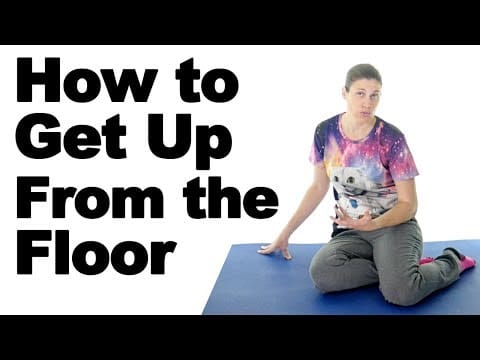
Watch the Routine in Action
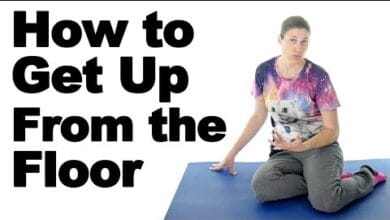
Follow along with this video to ensure you are using the correct form.