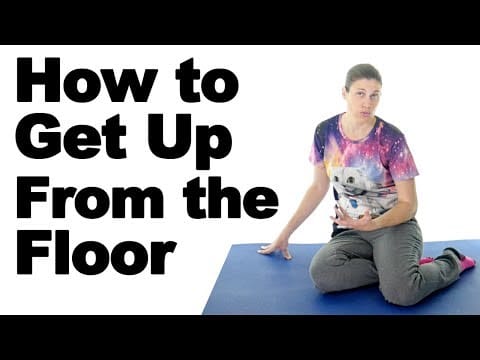
Introduction: We’ve all been there – a dropped item, a playful grandchild, or perhaps just a moment of rest on the floor. While getting down might seem easy enough, the challenge often begins when it’s time to get back up. For many seniors, this seemingly simple act can become a source of anxiety, even fear. Weak or injured knees, reduced flexibility, or a general feeling of instability can make the floor feel miles away. But here’s the good news: you don’t have to live with that worry. As Dr. Adrian, a senior fitness specialist, I’m here to equip you with a safe, step-by-step method to confidently rise from the floor, empowering you to navigate your home with greater freedom and peace of mind.
The Science: Why This Happens
Understanding why getting up from the floor becomes more challenging as we age is the first step towards mastering it. It’s not just a matter of “getting older”; specific physiological changes are at play:
- Sarcopenia (Age-Related Muscle Loss): After age 30, we can lose 3-8% of our muscle mass per decade, a process that accelerates after age 60. This affects our major muscle groups, particularly in the legs (quadriceps, hamstrings, glutes) and core, which are crucial for pushing off the floor and stabilizing the body.
- Decreased Flexibility and Range of Motion: Connective tissues (ligaments, tendons) become less elastic, and cartilage can thin, leading to stiffer joints. This makes movements like bending knees deeply, rotating the torso, or reaching for support more difficult and sometimes painful.
- Balance Impairment: Our balance systems (vestibular, visual, proprioceptive) can decline with age. This makes transitions from a low position to standing more precarious, as the body struggles to adjust to changes in center of gravity.
- Joint Issues (Especially Knees): Conditions like osteoarthritis are prevalent among seniors. Weak or arthritic knees can make kneeling, bearing weight, or pushing through a full range of motion excruciating. This often leads to compensatory movements that are less stable or put strain on other joints.
- Fear of Falling: A previous fall or even the general awareness of fall risks can lead to a psychological barrier. This fear can cause muscles to tense up, making smooth, controlled movements harder and increasing the risk of imbalance.
Addressing these factors through targeted exercises and a thoughtful approach to movement is key to regaining confidence and capability.
The Routine: Step-by-Step Guide
This method focuses on leveraging your body mechanics, utilizing support, and performing controlled movements. Remember to breathe deeply throughout the process.
- Assess Your Surroundings: Before you even begin to move, take a moment to look around. Is there a sturdy chair, a couch, or a strong table nearby? Make sure the path to it is clear and that there are no loose rugs or obstacles. If you’re outdoors, look for a stable bench or tree trunk.
- Roll onto Your Side: From your back, slowly roll onto your side, bending your knees. Use your arms to help you roll, engaging your core gently. This is much safer and puts less strain on your back than trying to sit straight up.
- Push Up to Hands and Knees: Using your top arm to push off the floor and your bottom arm to support, slowly lift your torso. Bring yourself into an all-fours position (on your hands and knees). Ensure your hands are directly under your shoulders and your knees are under your hips. Distribute your weight evenly.
- Crawl Towards Support: If a sturdy piece of furniture isn’t directly beside you, carefully crawl on your hands and knees towards it. Keep your movements slow and deliberate, maintaining your balance.
- Position Yourself Against Support: Once you’re next to a chair or couch, place one or both hands firmly on the edge of the furniture for stability. Ensure your grip is secure.
- Bring One Foot Forward: From your hands and knees, bring one foot forward, planting it flat on the floor directly under your hip. You should now be in a staggered kneeling position, with one knee on the floor and one foot flat on the ground (like a lunge). Choose your stronger leg to come forward first if you have a preference.
- Prepare to Push Up: Lean slightly forward, shifting your weight onto your front foot and your hands on the support. Take a deep breath.
- Slowly Push to Stand: Engage your core, push down through your front foot, and use your hands on the stable support to gently push yourself up. Focus on using your leg muscles (quads and glutes) to lift you. Avoid yanking yourself up with your arms alone. As you rise, slowly bring your back leg forward to meet your front leg.
- Stabilize and Regain Balance: Once standing, remain holding onto the support for a moment. Take a few deep breaths and allow your body to stabilize before you move away.
Dr. Adrian’s Pro Tip 💡: The “Halfway House” Method
For those days when getting all the way up feels daunting, or if you’re recovering from a period of weakness, consider the “Halfway House” method. Instead of aiming for a full stand immediately, use the furniture to help you transition to a seated position first. After getting to your hands and knees and crawling to a sturdy chair, instead of pushing directly to stand, pivot and lower yourself onto the chair seat. This breaks the large movement into smaller, less strenuous steps. You can rest, regain your breath, and then stand up from the chair in your usual manner. This method reduces the overall effort and demand on your leg strength and balance in one go, making the process feel much more manageable and safer. It’s about celebrating intermediate successes and building confidence step by step!
Common Mistakes to Avoid
- Rushing the Process: Speed is the enemy of safety when getting up from the floor. Each step should be slow, controlled, and deliberate. Rushing increases the risk of losing balance or straining muscles.
- Trying to Sit Straight Up: Attempting to sit straight up from your back puts immense strain on your abdominal muscles and back, especially if they are not strong. Always roll onto your side first.
- Not Using Available Support: Don’t be a hero! If there’s a sturdy chair, couch, or table nearby, use it. These aids significantly reduce the physical demand and increase your stability.
- Pushing Off Unstable Objects: Avoid grabbing onto flimsy furniture, movable objects (like rolling chairs), or anything that could tip over. Always test the stability of your chosen support before relying on it.
- Ignoring Pain: If you feel sharp pain at any point, stop. Do not push through pain. Listen to your body and adjust your movements or seek alternative methods. Persistent pain warrants a consultation with your doctor.
- Holding Your Breath: Many people instinctively hold their breath during strenuous activity. Remember to breathe deeply throughout the entire process. Proper breathing helps oxygenate your muscles and calm your nervous system.
Frequently Asked Questions
Q: What if I have very weak knees and can’t kneel?
A: If kneeling is painful or impossible, modify step 3. Instead of pushing to hands and knees, try to get into a “sideways crab” position. Roll to your side, then push up to your hands and one hip, swinging your legs around until you’re in a seated position on the floor, ideally near a stable piece of furniture. From there, you can place your hands on the furniture and try to push yourself up to stand using predominantly arm and core strength, or the “Halfway House” method described above.
Q: What if there’s no furniture nearby to help?
A: If you find yourself on the floor without immediate support, focus on moving yourself towards the nearest wall. Once you reach the wall, you can use it as a stable vertical support. You can push yourself up into a seated position against the wall, then slowly push your way up to standing by “climbing” your hands up the wall, or by using the steps outlined previously but with the wall for back support and stability.
Q: How can I practice this safely at home?
A: Practice makes perfect, but always practice safely! Start by practicing near a sturdy couch or bed during daylight hours when you feel well-rested. Have someone else in the house with you, if possible. Begin by just practicing getting into the hands-and-knees position, or the lunge position. Gradually work your way up to a full stand. The key is to build confidence and strength progressively, not to rush. Consider placing a soft mat on the floor for comfort during practice.
Q: Is it okay to ask for help if I can’t get up?
A: Absolutely! Your safety is paramount. Never feel ashamed to ask for help if you’ve fallen or are struggling to get up. If you live alone, consider wearing a medical alert device that connects you to emergency services or a loved one. If you have a phone nearby, call for assistance. It’s always better to be safe than to risk injury by struggling alone.
Conclusion
Learning how to safely get up from the floor is more than just a physical skill; it’s a profound step towards maintaining independence and confidence as you age. By understanding the science behind the challenge and practicing a structured, gentle routine, you can transform a moment of vulnerability into an opportunity for empowerment. Remember, patience with yourself, deliberate movements, and utilizing available support are your greatest allies. Don’t let the fear of falling or the difficulty of rising limit your life. Incorporate regular strength and balance exercises into your routine, and always consult with your doctor or a physical therapist for personalized advice. You have the strength within you; let’s help you rise to the occasion, safely and surely, every time.
Watch the Routine in Action
Follow along with this video to ensure you are using the correct form.
Related Articles You Might Find Useful
- Reclaim Your Confidence: Dr. Adrian’s Essential Guide to Getting Up Safely from the Floor
- Reclaim Your Confidence: Dr. Adrian’s Essential Guide to Getting Up from the Floor Safely
- Reclaim Your Rise: Mastering the Safe Way Up From the Floor