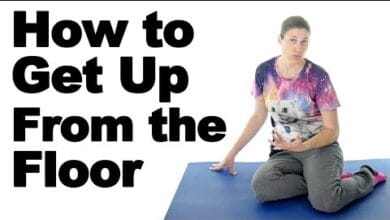
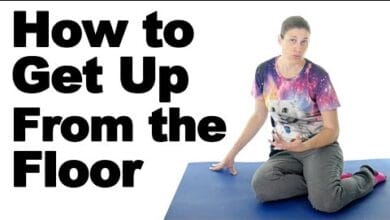
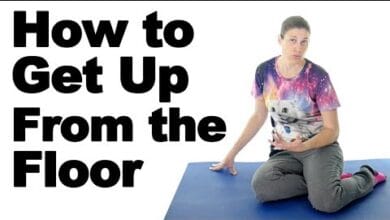
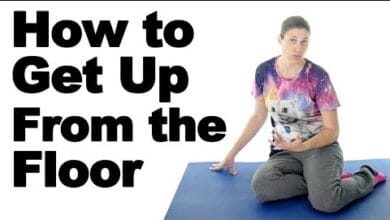
Reclaim Your Independence: Dr. Adrian’s Guide to Getting Up from the Floor Safely

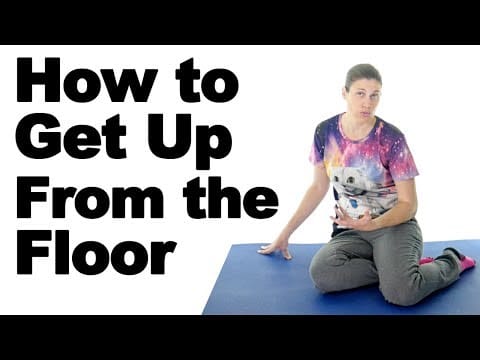
Introduction: I understand completely the apprehension that can come with finding yourself on the floor, whether from an accidental slip or simply choosing to sit there. For many, especially as we gracefully navigate the later chapters of life, or if we contend with weakened or injured knees, the simple act of rising can feel like an Olympic challenge. The fear of being unable to get up can sometimes limit our activities, even making us hesitant to get down and play with grandchildren or tend to a garden. But I’m here to tell you that this doesn’t have to be your reality. As Dr. Adrian, a senior fitness specialist, I believe in empowerment through education. In this comprehensive guide, we’ll break down safe, effective strategies to help you get up from the floor with confidence and ease, giving you back that invaluable sense of independence.
The Science: Why This Happens
Understanding *why* getting up from the floor becomes more challenging as we age is the first step towards overcoming it. It’s not just “getting old”; specific physiological changes are at play:
- Sarcopenia and Muscle Weakness: This age-related loss of muscle mass and strength is a primary culprit. Our leg and core muscles, vital for pushing off and stabilizing, naturally diminish over time if not actively maintained. This means less power to propel ourselves upwards.
- Reduced Balance and Proprioception: Our sense of where our body is in space (proprioception) and our ability to maintain equilibrium often decline with age. This makes dynamic movements, like transitioning from the floor to standing, feel less stable and increases the risk of a secondary fall.
- Decreased Flexibility and Range of Motion: Stiff joints and reduced flexibility, often due to conditions like arthritis or simply less movement, can make it difficult to get into the necessary positions to leverage your body effectively. Bending knees, twisting the torso, and reaching for support become harder.
- Joint Issues (e.g., Weak or Injured Knees): The context provided by Ask Doctor Jo highlights this perfectly. Osteoarthritis, previous injuries, or general knee weakness can make kneeling, putting pressure on the knee, or bending it deeply painful and risky, severely limiting conventional methods of getting up.
- Fear of Falling (Fallophobia): After a fall, or even just witnessing one, many seniors develop a significant fear of falling again. This anxiety can lead to hesitancy, stiff movements, and an over-reliance on others, paradoxically increasing the risk of falls and further decreasing independence.
These factors combined create a complex challenge, but recognizing them allows us to address each one with targeted strategies and a safe, step-by-step approach.
The Routine: Step-by-Step Guide
This routine is designed to be gentle on your joints and maximize your use of leverage and available support. Always move slowly and deliberately.
- 1. Assess Your Environment (Before You Move!): Before attempting to get up, scan your surroundings. Are there any sturdy pieces of furniture (a chair, sofa, bed) nearby? A wall you can lean on? Clear away any rugs, cords, or small objects that could trip you.
- 2. Roll to Your Side: If you are lying flat on your back, gently roll onto your side, bending your knees. Use your arms to assist, almost hugging yourself as you turn. This is easier than trying to sit straight up from a supine position.
- 3. Push Up to Hands and Knees: Using your arms, push your upper body up so you are on your hands and knees. Keep your back relatively flat, like a tabletop. If your knees are sensitive, try to move close to a cushion or pillow and place it under your knees for support.
- 4. Crawl or Scoot to Support: If you’re not already next to a sturdy piece of furniture or a wall, gently crawl or scoot your way over to it. Take your time, keeping your balance on all fours.
- 5. Place One Foot Forward: Once you’re next to your chosen support, bring one foot forward, placing it flat on the floor directly under your hip, so your knee is bent at roughly a 90-degree angle. Your other knee remains on the floor. Choose your stronger leg if possible.
- 6. Utilize Your Support: Place both hands firmly on the sturdy furniture (or wall). Make sure it won’t slide or tip. If using a chair, place hands on the seat or armrests.
- 7. Lean Forward and Push Up: Shift your weight forward slightly over your front foot. Push down through your hands on the support and push up through your front foot. This is where most of your power comes from. As you rise, aim to bring your back leg forward to meet your front leg, moving into a standing position.
- 8. Stabilize and Stand Tall: Once upright, pause for a moment. Allow your blood pressure to regulate and your balance to stabilize before you start walking. Take a deep breath.
Dr. Adrian’s Pro Tip 💡
My unique expert advice focuses on proactive preparation and micro-movements *while still on the floor*. Instead of immediately trying to hoist yourself up, take 30-60 seconds to “prime the pump.” While on your side or hands and knees, perform a few gentle ankle circles, knee bends (if comfortable), and wrist rotations. Take 3-5 slow, deep breaths, focusing on expanding your diaphragm. This brief period of gentle movement and conscious breathing enhances blood flow, improves joint lubrication, and calms the nervous system, making your muscles more responsive and your body less prone to sudden dizziness or rigidity when you do attempt to stand. It’s about setting your body up for success before the main event.
Common Mistakes to Avoid
- Rushing the Process: Trying to get up too quickly can lead to dizziness, loss of balance, or improper form, increasing the risk of another fall. Slow and steady wins the race every time.
- Not Using Available Support: People often underestimate how much assistance a sturdy chair, sofa, or wall can provide. Don’t be afraid or too proud to use these vital aids.
- Trying to Stand Straight Up from Lying: Attempting to sit up directly from a flat back position and then immediately stand requires immense core and leg strength, and often strains the back. Rolling to your side first is far safer and more efficient.
- Ignoring Pain Signals: Your body gives you important feedback. If a movement causes sharp pain, stop immediately. Re-evaluate your position or method. Pushing through pain can lead to injury.
- Holding Your Breath: Many instinctively hold their breath during strenuous activity. This can elevate blood pressure and cause lightheadedness. Remember Dr. Adrian’s Pro Tip: breathe deeply and consistently throughout the process.
- Not Clearing Your Path: Neglecting to check for obstacles beforehand can turn a successful rise into another hazard. Always survey your immediate environment.
Frequently Asked Questions
Q: What if I can’t get up at all, even with these steps?
A: First, don’t panic. If you have a medical alert device, activate it. If not, try to make noise or call out for help. Shuffle or crawl to a phone if possible. Always ensure someone knows you’re home alone or check in regularly. If you frequently find yourself unable to get up, speak to your doctor about strength and balance training, and consider investing in a personal emergency response system (PERS).
Q: How can I make getting up from the floor easier in the long term?
A: Consistency is key! Regular strength training exercises (focusing on legs, glutes, and core), balance training, and flexibility work (like gentle stretching or yoga) will significantly improve your ability. Consult with a physical therapist or certified senior fitness specialist for a personalized exercise program.
Q: Should I practice this routine, even if I haven’t fallen?
A: Absolutely! Practicing in a controlled, safe environment (perhaps with someone else present, initially) builds muscle memory and confidence. The more familiar your body is with the movements, the more naturally and effectively you’ll execute them when you truly need to.
Q: What if I have bad knees or other joint issues that make kneeling painful?
A: If kneeling is painful, try to move towards a low, sturdy piece of furniture like a coffee table or a very low chair. Instead of dropping to both knees, bring one foot forward first, placing your hands on the furniture. Then, gently lower the *other* knee to the floor *if absolutely necessary*, or try to push up directly from the one-knee-down position if you can manage it. You can also use cushions or folded blankets to pad your knees. Alternatively, you can modify the hands-and-knees step by sitting up directly (if possible), scooting over to a chair, and then using your arms to push yourself up into the chair, then standing from the chair. Work with a physical therapist to find the best modifications for your specific condition.
Conclusion
Finding yourself on the floor doesn’t have to be a source of fear or a barrier to your active lifestyle. By understanding the underlying reasons and meticulously practicing these safe, proven steps, you can regain control and confidence. Remember, the journey to renewed independence is about consistent effort, smart strategies, and listening to your body. As your senior fitness specialist, I encourage you to integrate these techniques into your life, practice regularly, and never hesitate to seek professional guidance from your doctor or a physical therapist. Stay strong, stay safe, and keep moving forward – Dr. Adrian is here to support you every step of the way.
Watch the Routine in Action
Follow along with this video to ensure you are using the correct form.