Unlock Your Hands: Gentle Exercises to Soothe Stiff Fingers and Hands Arthritis Pain

“`html
Introduction: Do you find yourself struggling with the simple acts of daily life – turning a doorknob, buttoning a shirt, or even just holding a pen? The persistent stiffness and nagging pain in your fingers and hands can feel debilitating, turning once-effortless tasks into formidable challenges. If you’re nodding along, know that you’re not alone, and more importantly, there’s hope and practical solutions. I’m Dr. Adrian, a senior fitness specialist, and I understand the unique frustrations that come with hand arthritis. My mission is to empower you with knowledge and effective strategies to reclaim comfort and function in your hands. Today, we’ll explore gentle, targeted exercises designed to achieve the two main goals for hand osteoarthritis: maintaining and improving both mobility and strength, ultimately reducing your hand pain and enhancing your quality of life.
The Science: Why This Happens
To truly combat stiffness and pain, it helps to understand what’s happening beneath the surface. Hand arthritis, most commonly osteoarthritis, occurs when the protective cartilage that cushions the ends of your bones wears down over time. This cartilage acts like a smooth, gliding surface, allowing your joints to move freely. Without it, bones can rub directly against each other, leading to friction, inflammation, pain, and, crucially, stiffness.
In the hands, the joints most frequently affected are the base of the thumb (CMC joint), the middle knuckle of your fingers (PIP joints), and the knuckle closest to your fingernail (DIP joints). This breakdown not only causes pain but also reduces the joint’s range of motion, making everyday movements difficult and often painful. Over time, the body may even try to compensate by forming bone spurs, further contributing to stiffness and altered joint mechanics.
So, why do exercises help? Regular, gentle movement is vital because it:
- Nourishes Cartilage: Joint fluid (synovial fluid), which lubricates and nourishes your cartilage, is circulated better with movement.
- Reduces Stiffness: Movement helps to break up adhesions and keeps the joint capsule pliable, preventing it from stiffening up.
- Strengthens Supporting Muscles: Stronger muscles around the joint provide better support and stability, reducing the stress on the joint itself.
- Improves Range of Motion: Consistent, gentle exercises help restore and maintain the full extent of your joint’s movement.
The Routine: Step-by-Step Guide
Consistency is key with these exercises. Aim to perform them once or twice daily, or at least every other day, focusing on slow, controlled movements. Remember, never push into sharp pain.
Exercise 1: Finger Bends and Straightening (Fist to Open Hand)
This foundational exercise targets overall finger flexion and extension, improving the mobility of all your finger joints.
- How to Perform:
- Start with your fingers straight and relaxed, palm facing up or down on a flat surface, or held comfortably in front of you.
- Slowly make a gentle fist, curling your fingers down towards your palm. Do not clench tightly; aim for a soft, comfortable fist.
- Hold the gentle fist for 5-10 seconds.
- Slowly uncurl your fingers, extending them as straight as comfortable without forcing.
- Hold the extended position for 5-10 seconds.
- Repetitions: Perform 5-10 repetitions for each hand.
- What it Targets: Full range of motion for all finger joints (DIP, PIP, MCP joints).
Exercise 2: Thumb Touches (Thumb Opposition)
Crucial for improving the mobility of your thumb’s CMC joint, which is vital for pinching, grasping, and fine motor skills.
- How to Perform:
- Start with your hand open, fingers and thumb extended comfortably.
- Slowly touch the tip of your thumb to the tip of your index finger, forming a gentle “O” shape.
- Hold for 2-3 seconds.
- Return your thumb to the starting position.
- Repeat, touching your thumb to your middle finger, then your ring finger, and finally your pinky finger.
- After touching the pinky, try to glide your thumb across your palm towards the base of your pinky finger if comfortable, stretching the thumb across the palm.
- Repetitions: Perform this sequence (thumb to each finger, then across palm) 3-5 times for each hand.
- What it Targets: Thumb CMC joint mobility, dexterity, and fine motor coordination.
Exercise 3: Finger Spreads (Finger Abduction and Adduction)
This exercise helps improve lateral movement and flexibility between your fingers, often neglected but important for wider grasps and stability.
- How to Perform:
- Place your hand flat on a table, palm down, fingers gently together.
- Slowly spread your fingers apart as wide as comfortable, without lifting your palm from the table.
- Hold the spread position for 5-10 seconds.
- Slowly bring your fingers back together.
- Repetitions: Perform 5-10 repetitions for each hand.
- What it Targets: Mobility of the MCP joints and the small intrinsic muscles between your fingers.
Exercise 4: Gentle Grip Strengthener
Once mobility is improving, gentle strengthening becomes important. This exercise helps build functional strength in your hand and forearm muscles.
- How to Perform:
- Hold a soft stress ball, a rolled-up sock, or a small piece of therapy putty in the palm of your hand.
- Gently squeeze the object, using only moderate effort. You should feel a contraction but no sharp pain.
- Hold the squeeze for 3-5 seconds.
- Slowly release the grip and relax your hand for 5-10 seconds.
- Repetitions: Perform 8-12 repetitions for each hand. Start with a very soft object and gradually increase firmness if comfortable.
- What it Targets: Hand and forearm muscles, improving grip strength for daily tasks.
Dr. Adrian’s Pro Tip 💡
The power of gentle warmth and mindful movement cannot be overstated. Before starting your exercises, immerse your hands in warm water for 5-10 minutes, or use a warm compress. Heat helps relax muscles, increase blood flow, and make tissues more pliable, preparing your joints for movement and reducing initial stiffness. As you move, pay close attention to your body’s signals. Each exercise is an opportunity for mindful self-care, not a race. Slow, deliberate movements performed with awareness are far more beneficial than quick, forced ones. If you feel any sharp or increasing pain, stop immediately and gently massage the area or apply a cold compress if there’s swelling. Consistency in gentle self-care is your greatest ally.
Common Mistakes to Avoid
- Pushing Through Sharp Pain: This is the most crucial rule. While some mild discomfort or stretching is acceptable, sharp, stabbing, or increasing pain is a sign to stop. Pushing through pain can worsen inflammation and damage your joints.
- Forcing Movements: Never yank or force your fingers or thumb into positions they don’t want to go. Arthritis limits range of motion; respect those limits and work within your comfortable range.
- Ignoring Consistency: Sporadic exercise won’t yield lasting results. Make these exercises a regular, gentle part of your daily routine. Even 5-10 minutes twice a day is better than one long, intense session once a week.
- Neglecting Warm-Up: Skipping the warm-up (like warm water immersion) can make exercises more difficult and less effective, potentially leading to more discomfort.
- Using Too Much Resistance Too Soon: For grip strengthening, starting with a too-firm object can strain your joints. Begin with something very soft and only progress when truly comfortable.
- Focusing Only on One Hand: Even if one hand is more affected, performing exercises on both hands helps maintain symmetry and often benefits the less affected hand preventatively.
Frequently Asked Questions
Q: How often should I do these exercises?
A: Ideally, aim for once or twice a day, or at least every other day. Consistency is more important than intensity. Even a few minutes of gentle movement each day can make a significant difference.
Q: When will I start to see results?
A: Results vary for everyone. Some individuals may feel a reduction in stiffness and pain within a few weeks, while for others, it might take a month or two of consistent practice. Be patient and consistent; your body needs time to adapt and heal.
Q: Can exercise make my arthritis worse?
A: If done correctly and gently, these exercises should not worsen your arthritis. In fact, they are designed to improve joint health. However, pushing through sharp pain or performing exercises too vigorously can exacerbate symptoms. Always listen to your body.
Q: Should I use heat or cold for my hands?
A: Heat therapy (warm water, heating pads) is generally recommended before exercises to loosen stiff joints. Cold therapy (ice packs) is beneficial after exercises or during flare-ups to reduce pain and inflammation, especially if you notice swelling.
Q: What if I have pain in only one hand?
A: It’s still beneficial to exercise both hands. While the primary goal is to alleviate symptoms in the affected hand, exercising the less affected hand can help maintain its function and potentially delay or prevent the onset of symptoms there.
Q: Should I consult my doctor before starting?
A: Absolutely. While these exercises are generally safe and beneficial, it’s always wise to consult with your doctor or a physical/occupational therapist before starting any new exercise program, especially if you have severe arthritis, other underlying conditions, or recent injuries.
Conclusion
Living with stiff and painful hands due to arthritis doesn’t mean resigning yourself to a life of limited function. By incorporating these gentle, targeted exercises into your daily routine, you hold the power to significantly reduce pain, improve mobility, and enhance your overall quality of life. Remember the dual goals: to maintain and build both mobility and strength. Start slowly, be consistent, listen to your body, and never underestimate the profound impact that mindful movement can have. Your hands are precious tools; give them the care they deserve. Embrace this journey towards greater comfort and capability, one gentle movement at a time. Your healthier, happier hands are within reach.
“`
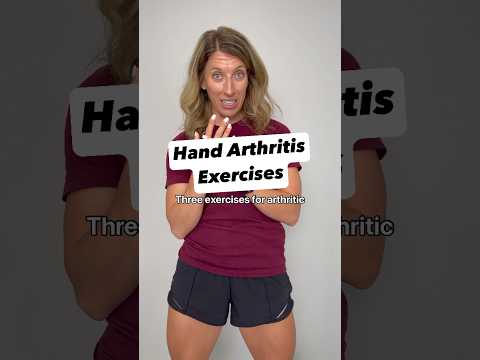
Watch the Routine in Action
Follow along with this video to ensure you are using the correct form.
Related Articles You Might Find Useful
- Reclaim Your Confidence: Safe Balance Exercises for a Fall-Free Life
- Reclaim Your Core: Dr. Adrian’s Gentle Seated Core Workout for Seniors & Beginners
- Reclaim Your Knees: Gentle Bedside Exercises to Ease Pain & Strengthen for a More Active Tomorrow!

Nice post. I learn something totally new and challenging on websites