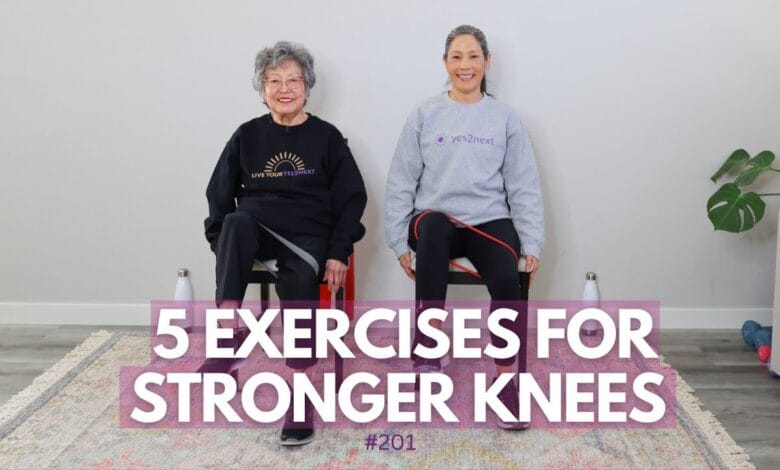
Chair Exercises for Stronger Knees: Boost Joint Health & Balance
Are stiff, achy knees holding you back from enjoying life’s simple pleasures, or does the fear of losing your balance make you hesitant to move? You’re not alone, and the good news is that reclaiming your comfort and confidence is within reach. This gentle yet powerful chair-based exercise routine is designed specifically for those 50+ to safely strengthen the muscles supporting your knees, reduce pain, and restore your freedom of movement.
The Science Behind Pain-Free Knees and Confident Steps
Our knees bear the brunt of our daily movements, and as we age, the cartilage can thin, and supporting muscles may weaken, leading to discomfort and instability. The secret to lasting knee health isn’t to stop moving, but to move smarter. By strengthening the quadriceps, hamstrings, glutes, and calf muscles—all crucial stabilizers around the knee joint—we create a stronger, more protective “cushion” of muscle. This reduces stress on the joint itself, improves alignment, and enhances proprioception (your body’s sense of position), which is vital for maintaining balance and preventing falls.
This targeted approach offers a cascade of benefits, making it an indispensable part of your routine for long-term **joint maintenance** and active **independent living**. Regularly engaging these muscles significantly improves your stability and coordination, directly contributing to **fall prevention** by building the strength and reflexes needed to catch yourself. Beyond the physical, the enhanced mobility and reduced pain often lead to a profound boost in self-confidence, encouraging you to stay active, social, and engaged in all aspects of life. Experts consistently advocate for consistent, low-impact strength training as a cornerstone for healthy aging, and this routine perfectly fits that recommendation.
Your Gentle 10-Minute Chair Routine for Lasting Knee Relief
Commit just a few minutes a day to this accessible routine, aiming for 2-3 sets of 10-15 repetitions for each exercise, at least twice a week. Listen to your body, and always consult your doctor before starting any new exercise program.
-
Warm-Up & Mindful Posture: Before any movement, take a moment to sit tall in your chair, feet flat on the floor, shoulders relaxed. Begin with gentle ankle rotations and knee flexion/extension (bending and straightening) without resistance. This isn’t just about preparing your muscles; it’s about connecting with your body and setting an intention. A proper warm-up increases blood flow to the joints and muscles, enhancing flexibility and reducing the risk of strain. Think of it as gently oiling the gears, making subsequent movements smoother and more effective.
-
Slow Marching (Seated): While seated, lift one knee towards your chest, then slowly lower it, alternating legs. Focus on controlled, deliberate movements rather than speed. This exercise targets the hip flexors and engages your core, both vital for a strong, stable gait. By practicing controlled marching, you’re improving the fundamental mechanics of walking, enhancing your ability to lift your feet safely and confidently, which directly translates to better **balance** and reduced tripping hazards in your daily life. Keep your back straight and avoid leaning back.
-
Leg Extensions: Sit with good posture, then slowly extend one leg straight out in front of you, flexing your quad muscle at the top. Hold briefly, then slowly lower. This is a phenomenal exercise for strengthening your quadriceps, the large muscles at the front of your thigh that are crucial for knee stability and absorbing impact. To deepen the challenge, you can add a light resistance band looped around your ankles. Remember to control the lowering phase – don’t just let your leg drop – as this eccentric contraction builds strength just as effectively as the lift.
-
Hamstring Curls: From a seated position, press your heel into the floor and slide it back towards the chair, engaging your hamstring (the back of your thigh). You can also lift your foot slightly off the floor, bending your knee to bring your heel towards your glutes. This exercise is vital for creating muscular balance around the knee. Often, our quads are stronger than our hamstrings, leading to imbalances that can contribute to knee pain. Strengthening the hamstrings helps support the knee from the rear, improves walking efficiency, and can alleviate pressure on the knee joint. Again, a resistance band can add a beneficial challenge here.
-
Side Steps (Abduction) & Heel Raises: For side steps, simply move one leg out to the side, then bring it back to the center, keeping your foot on the floor. This targets the hip abductors, critical for lateral stability and preventing falls when shifting weight or stepping sideways. Follow this with seated heel raises: keeping your toes on the floor, lift your heels as high as possible, squeezing your calf muscles. Strong calves and ankles are essential for pushing off during walking, maintaining balance, and improving overall lower leg circulation. These two movements together create a powerful combination for comprehensive lower body stability and resilience.
Remember, every small, consistent effort compounds into significant progress. Start today, take it slow, and celebrate every small step toward greater comfort, confidence, and the vibrant, independent life you deserve. Your body is incredibly resilient, and with the right care, you can continue to move with joy and ease for years to come.
Watch the Full Routine Here
Source: Original content expanded from YouTube video: Transform Weak Knees: 5 Chair Exercises for Seniors