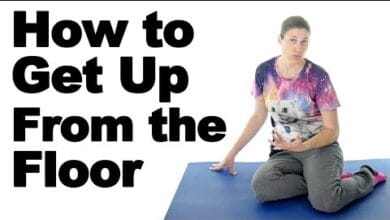
Reclaim Your Confidence: Dr. Adrian’s Essential Guide to Getting Up from the Floor Safely

“`html
Introduction: The thought of falling can be a significant concern for many seniors, and rightly so. But perhaps even more daunting is the fear of being unable to get back up from the floor. This anxiety can limit your activities, erode your independence, and unfortunately, even increase your risk of falling due to hesitation. As Dr. Adrian, a senior fitness specialist, I understand these concerns deeply. My goal today is to empower you with a clear, safe, and effective strategy to master the floor-to-stand transition, helping you reclaim your freedom and confidence in every step.
The Science: Why This Happens
Understanding why getting up from the floor becomes more challenging as we age is the first step towards overcoming it. This isn’t just about ‘getting older’; it’s about specific physiological changes that can be addressed:
- Sarcopenia (Age-Related Muscle Loss): Our muscles naturally begin to weaken and atrophy after age 30, a process that accelerates with inactivity. Core, leg, and arm strength are all vital for pushing up from the floor, and their decline makes this task harder.
- Decreased Flexibility and Range of Motion: Stiff joints and reduced flexibility in the hips, knees, and spine make it difficult to maneuver into the necessary positions (like kneeling or squatting) to initiate the standing process safely.
- Impaired Balance and Proprioception: Proprioception is our body’s sense of its position in space. As we age, this can diminish, making us feel less stable and confident when shifting our weight or balancing on one leg. The vestibular system, responsible for balance, can also become less efficient.
- Osteoarthritis and Joint Pain: Chronic conditions like arthritis can cause pain and stiffness in the knees, hips, and back, making certain movements painful or even impossible without modification. The fear of exacerbating pain often leads to avoidance.
- Fear of Falling (FOF): Perhaps the most insidious factor. A previous fall, or even just the fear of one, can create a psychological barrier. This fear can lead to tentative movements, muscle guarding, and reduced physical activity, creating a vicious cycle that further weakens the body.
By understanding these underlying factors, we can approach the solution with targeted strategies, building not just technique, but also the foundational strength and confidence needed.
The Routine: Step-by-Step Guide for Safe Floor-to-Stand Transition
This routine emphasizes a methodical, controlled approach, ensuring safety and efficiency. Remember to breathe throughout each step and move at your own pace.
- Assess Your Surroundings: Clear and Calm.
- Before you even attempt to move, take a moment to assess the immediate area. Are there any obstacles (rugs, furniture, pets) that could impede your movement or cause a secondary fall?
- Take a few deep breaths to calm yourself and focus. Panic is your enemy.
- Roll onto Your Side: The Foundation.
- If you are lying on your back, bend your knees, place your feet flat on the floor, and use your core and arms to gently roll onto your side. Choose the side that feels most comfortable.
- Use your bottom arm as a pillow and your top arm to assist in pushing yourself up.
- Push Up to a Seated Position: Initial Lift.
- Using your top arm, push down on the floor or ground near your chest. Simultaneously, use your bottom arm to brace yourself.
- Push yourself up until you are sitting upright, possibly with your legs still bent or extended in front of you. Take a moment here to regain your bearings.
- Transition to Hands and Knees: The Crawl Position.
- From your seated position, bend your knees and carefully bring your hands to the floor in front of you, shoulder-width apart.
- Shift your weight forward onto your hands and knees, ensuring your knees are directly under your hips and your hands under your shoulders. This is a stable, four-point stance.
- If you have knee pain, you can place a folded towel or cushion under your knees for padding.
- Find a Stable Support (If Available): Leverage is Key.
- Scan the area for a sturdy piece of furniture: a strong chair, a couch, or a bed frame.
- Crawl towards it until you are close enough to place one hand firmly on the support. Avoid anything that might tip over or roll.
- Move to a Half-Kneeling Lunge: The Power Stance.
- While on your hands and knees, and holding onto your stable support with one hand (if applicable), bring one foot forward. Place it flat on the floor, directly under your hip, so your knee is bent at roughly a 90-degree angle. This is the lunge position.
- Ensure your front foot is firmly planted, and your front shin is vertical.
- Push Up to Standing: The Final Ascent.
- Place your other hand on your support (if you weren’t already).
- Distribute your weight evenly between your front foot, your back knee, and your hands on the support.
- Engage your core, push down through your front foot and your hands, and slowly straighten your legs to stand up.
- Keep your head up and eyes forward. Avoid looking down at your feet as you rise.
- Once standing, pause for a moment to ensure your balance before moving.
Dr. Adrian’s Pro Tip 💡
The “Pre-Flight Check” & The Power of Progressive Practice: Don’t wait for a fall to test your ability to get up. My unique advice is to regularly incorporate a “pre-flight check” into your routine in a safe, controlled environment. This involves mindfully practicing getting down to the floor and back up again, perhaps once a week. Think of it as a crucial strength and mobility drill, not just an emergency procedure. Start by practicing near a sturdy chair or a couch with cushions nearby for knee padding. The goal isn’t just to memorize the steps, but to build the specific muscle memory, core stability, and confidence required. Regular, low-stakes practice transforms this potentially intimidating task into a manageable exercise, making you stronger and more resilient when you truly need it.
Common Mistakes to Avoid
- Rushing the Process: Speed is the enemy of stability. Take your time with each step, breathing deeply and ensuring you feel balanced before moving to the next.
- Not Using Available Support: If a sturdy chair, wall, or piece of furniture is nearby, use it! It’s not a sign of weakness; it’s a smart strategy for safety.
- Holding Your Breath: This can increase blood pressure and tension. Remember to breathe steadily and deeply throughout the entire sequence.
- Trying to Stand Directly from Sitting or Lying: Attempting to ‘jackknife’ directly up from the floor without intermediate steps puts excessive strain on your back and dramatically increases the risk of losing balance.
- Ignoring Pain: If any movement causes sharp or increasing pain, stop. Re-evaluate your position or, if pain persists, consult a healthcare professional.
- Not Clearing the Space First: Beginning the process without ensuring a clear path can lead to bumping into objects or tripping during the ascent.
Frequently Asked Questions
Q: What if I have bad knees or severe arthritis?
A: If kneeling is painful, try to use a sturdy, low object (like a firm ottoman or a stack of thick books) to elevate one foot into a half-kneeling position, avoiding direct pressure on the knee. You can also try to push yourself up into a low chair directly from a seated position on the floor, if possible. Always prioritize comfort and listen to your body. Consult a physical therapist for personalized modifications.
Q: What if there’s no furniture nearby to help me?
A: This is where strong core and leg muscles become even more critical. The technique remains the same, but you’ll rely more heavily on your own strength to push up from the lunge position. Practicing this scenario (under supervision, if possible) in a safe, open space can build this independent capability. If you find yourself unable to rise, attract attention by calling for help or using an emergency alert device.
Q: How often should I practice this routine?
A: I recommend incorporating this “pre-flight check” (as mentioned in my Pro Tip) once or twice a week. It serves as a great functional strength and mobility exercise. Consistency is key, even if it’s just a few repetitions.
Q: Does practicing this help prevent falls?
A: Absolutely! The strength, balance, and proprioception you develop by regularly practicing this routine directly contribute to better overall stability and coordination, which are crucial in preventing falls. It also reduces the fear of falling, which itself is a major risk factor.
Q: When should I seek professional help?
A: If you consistently struggle with this routine, experience significant pain, have recurrent falls, or feel overwhelming fear, it’s time to consult your doctor or a physical therapist. They can assess your individual needs, identify underlying issues, and provide a tailored exercise program.
Conclusion
Learning how to get up from the floor safely is more than just a technique; it’s an investment in your independence, well-being, and peace of mind. By understanding the ‘why’ behind the challenge and diligently practicing this methodical routine, you can build the strength, flexibility, and confidence needed to navigate your world without undue fear. Remember, consistent, gentle practice in a safe environment is your greatest tool. Don’t let the fear of a fall dictate your life. Empower yourself with this vital skill, and continue to live life on your terms. Stay active, stay safe, and keep moving!
“`
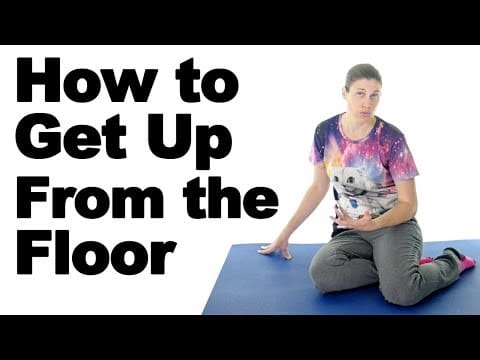
Watch the Routine in Action
Follow along with this video to ensure you are using the correct form.
Related Articles You Might Find Useful
- Reclaim Your Rise: Mastering the Safe Way Up From the Floor
- Reclaiming Your Rise: Dr. Adrian’s Essential Guide to Getting Up Safely From the Floor
- Reclaim Your Independence: Dr. Adrian’s Guide to Getting Up from the Floor Safely