5 Daily Moves for Lasting Joint Health & Fall Prevention Over 50
Feeling that familiar creak in your joints, or a whisper of worry about losing your balance? You’re not alone. Many of us over 50 face these challenges, but the good news is, reclaiming your vitality and confidence is absolutely within reach. This simple, daily routine is designed to gently strengthen your body, improve your balance, and keep your joints feeling lubricated and happy, paving the way for a more active, independent life.
Unlock Your Body’s Potential: The Science of Ageless Movement
Our bodies are designed to move, and consistent, gentle activity is the ultimate elixir for aging joints and muscles. Regular exercise, particularly the targeted movements we’re about to explore, nourishes your cartilage by encouraging synovial fluid production – your body’s natural joint lubricant. It also strengthens the crucial muscles and ligaments surrounding your joints, providing essential support and stability. This proactive approach is fundamental for effective **fall prevention**, significantly reducing your risk of trips and stumbles. Furthermore, maintaining strength and flexibility through dedicated **joint maintenance** directly translates into greater ease in everyday tasks, ensuring you can continue enjoying **independent living** well into your golden years. It’s not about becoming a bodybuilder; it’s about staying robust enough to embrace life fully, backed by decades of physical therapy and exercise science.
Your Empowering 10-Minute Daily Routine for Lasting Mobility
-
Master Your Balance: Single-Leg Stands & Heel-to-Toe Walks
What to do: Stand tall, gently lift one foot a few inches off the floor, and hold for 10-30 seconds. Repeat on the other side. For an added challenge, try a heel-to-toe walk, placing the heel of one foot directly in front of the toes of the other, as if walking on a tightrope.
Why it helps: As we age, our proprioception (our body’s sense of where it is in space) can diminish, making us more susceptible to falls. These exercises directly train your nervous system, inner ear (vestibular system), and the small stabilizing muscles in your feet and ankles. By challenging your equilibrium, you’re building a stronger, more reliable foundation, making you feel steadier and more confident on your feet. Start with support (a wall or sturdy chair) and gradually reduce reliance as your balance improves. -
Boost Lower Leg Strength & Circulation: Calf Raises
What to do: Stand with feet hip-width apart, holding onto a support if needed. Slowly lift onto the balls of your feet, raising your heels as high as comfortable. Hold briefly, then slowly lower back down. Aim for 10-15 repetitions.
Why it helps: Your calf muscles are unsung heroes, crucial for pushing off the ground when walking, climbing stairs, and even maintaining proper posture. Strong calves also act as a “second heart,” aiding venous return and improving circulation in your lower legs, which can reduce swelling and discomfort. This exercise also strengthens your ankles, improving their stability and agility, which is vital for navigating uneven surfaces and preventing twists and sprains. -
Combat Stooping & Improve Posture: Wall Chest Stretch
What to do: Stand facing a wall or doorway. Place your forearm flat against the wall, elbow bent at 90 degrees, upper arm parallel to the floor. Gently turn your body away from the arm on the wall until you feel a stretch across your chest and front of your shoulder. Hold for 20-30 seconds per side.
Why it helps: Many of us develop a rounded shoulder posture from daily activities like sitting, driving, and even looking at our phones. This “stooping” can compress the spine, restrict breathing, and contribute to neck and back pain. This gentle stretch opens up the chest and lengthens the pectoral muscles, allowing your shoulders to naturally pull back and down. Improved posture not only looks better but also allows for deeper breathing, better digestion, and less strain on your spinal column. -
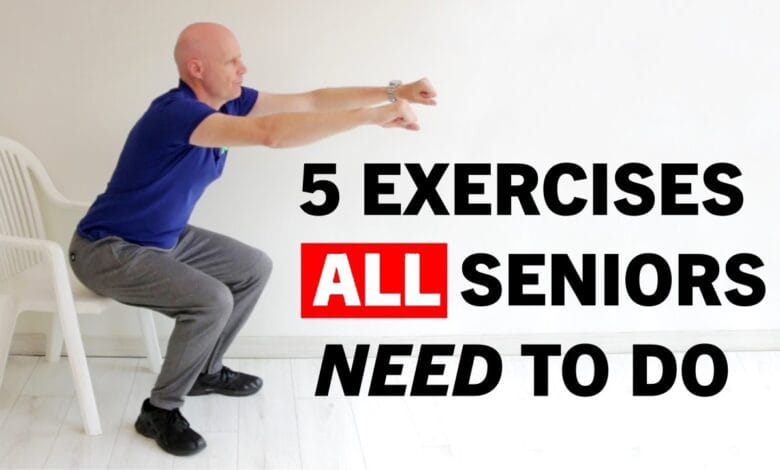
Enhance Leg Strength & Mobility: Chair Squats (Sit-to-Stands)
What to do: Sit on the edge of a sturdy chair with your feet flat on the floor, hip-width apart. Lean slightly forward, engage your core, and push through your heels to stand up without using your hands if possible. Slowly and with control, lower yourself back down to the chair, barely touching it before standing again. Aim for 10-15 repetitions.
Why it helps: The ability to stand up from a seated position is a foundational movement for independent living. Chair squats build powerful leg and glute muscles, which are essential for walking, climbing stairs, and maintaining balance. This exercise mimics real-life movements, strengthening your entire lower body and improving hip and knee mobility. Start with a higher chair for easier movement, or use your hands for assistance, gradually progressing as you gain strength. -
Strengthen Upper Body & Core: Wall Push-Ups
What to do: Stand facing a wall, about arm’s length away. Place your hands on the wall, slightly wider than shoulder-width, at chest height. Keep your body in a straight line from head to heels, engage your core, and slowly bend your elbows to bring your chest towards the wall. Push back to the starting position. Aim for 10-15 repetitions.
Why it helps: Upper body strength is crucial for countless daily tasks, from carrying groceries to opening jars, and even for safely breaking a fall. Wall push-ups are an accessible way to build strength in your chest, shoulders, and triceps, while also engaging your core for stability. This exercise helps maintain bone density in your upper body and ensures you have the functional strength to navigate your environment with confidence and ease.
Remember, this is your journey, not a race. Start today, take it slow, and celebrate every small step toward greater independence and a life lived with less pain and more joy. Your body will thank you!
Watch the Full Routine Here
Source: Original content expanded from YouTube video: 5 ESSENTIAL Exercises For People Over 60